
NASA’s Psyche Mission: Spacecraft Uses Mars as a Gravity “Slingshot” on Its Way to a One-of-a-Kind Asteroid
One space story has been trending hard over the past few days — NASA’s Psyche spacecraft flying past Mars. NASA recently released stunning new images and a time-lapse video from the flyby, and it’s been lighting up social media ever since. nasa psyche mars flyby Here’s a complete breakdown of what the mission is, what happened at Mars, and why it matters.
What Exactly Is the Psyche Mission?
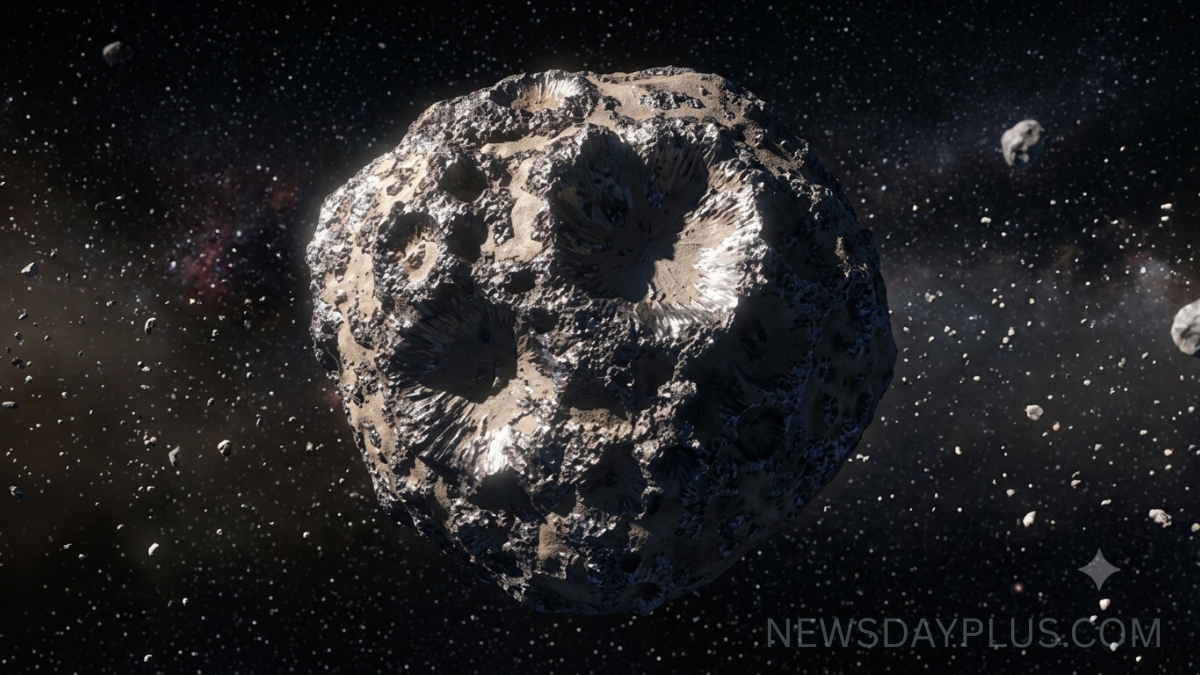
NASA’s Psyche spacecraft launched in October 2023, and its destination is 16 Psyche, a metal-rich asteroid located in the main asteroid belt between Mars and Jupiter. This isn’t your average rocky or icy space rock — scientists believe it could be the exposed metallic core of an ancient, shattered protoplanet, rich in iron and nickel.
What Happened at Mars?
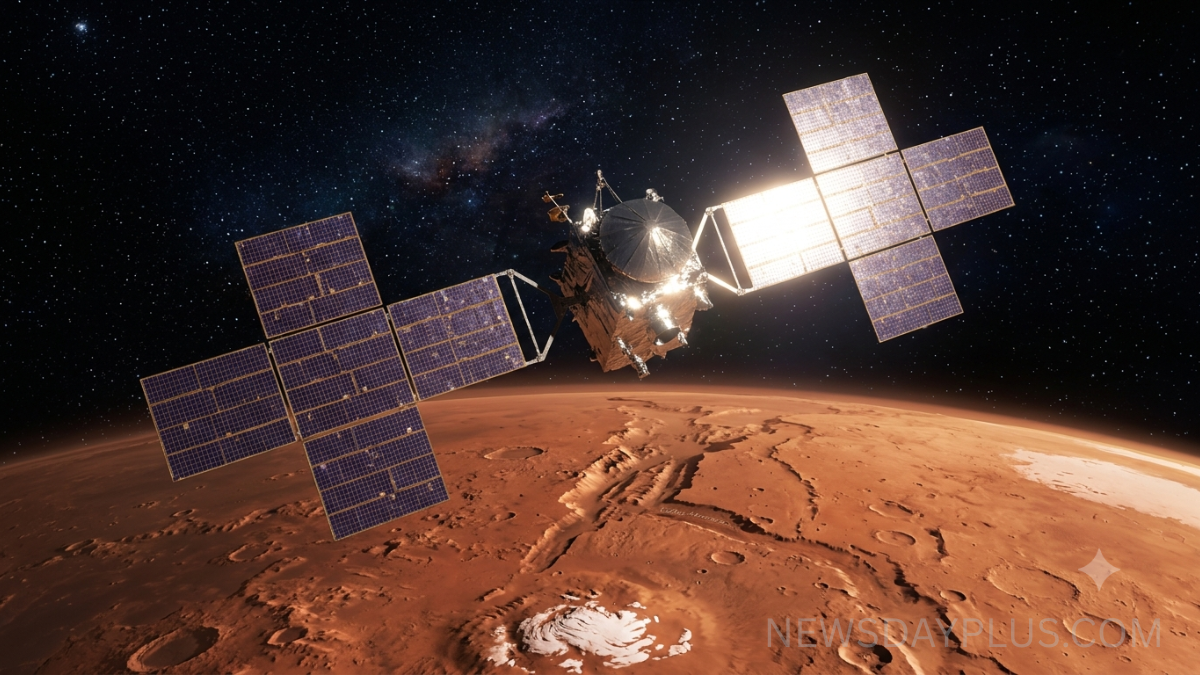
On May 15, 2026, the Psyche spacecraft made its closest approach to Mars, passing just about 4,609 kilometers (2,864 miles) from the planet’s surface. This wasn’t a scenic detour — it was a carefully planned maneuver known as a gravity assist.
In a gravity assist, a spacecraft uses a planet’s gravitational pull to change its speed and trajectory without burning any onboard fuel. Psyche used Mars to pick up a critical speed boost and slightly adjust its orbital plane, setting it on a direct path toward the asteroid Psyche.
During the flyby, the spacecraft’s multispectral imager captured striking images of Mars — from the south polar cap all the way to the famous Valles Marineris canyon system. The photos also featured the double-ring crater Huygens, wind-carved streaks in the Syrtis Major region, and even a curious “tadpole crater.”

More Than Just a Speed Boost — A Dress Rehearsal
The Mars flyby wasn’t only about gaining momentum. NASA’s team also used the opportunity to test Psyche’s science instruments — essentially a dress rehearsal for what they’ll do once the spacecraft reaches the actual asteroid in 2029.
The multispectral imager captured thousands of observations of Mars, helping engineers fine-tune the precise imaging and navigation techniques needed to orbit the asteroid.
The magnetometer measured magnetic signals around Mars. According to MIT researchers, this instrument’s real job is to eventually detect whether asteroid Psyche has its own magnetic field.
The team monitored the spacecraft’s Doppler radio signal via NASA’s Deep Space Network (DSN) to confirm Psyche was tracking exactly along its planned trajectory.
Psyche’s navigation lead, Don Han, said the team was confident in its calculations, but watching the DSN’s real-time signal during the actual flyby was still an exciting moment.
Why Is Asteroid 16 Psyche Such a Big Deal?
16 Psyche was first discovered in 1852 by Italian astronomer Annibale de Gasparis. It’s about 280 kilometers wide and stands apart from most asteroids because it’s believed to contain large amounts of iron and nickel.
That’s also why it’s grabbed headlines for a jaw-dropping estimate — if its metal content could somehow be brought back and sold, some calculations put its value at around $10 quintillion, more than the entire global economy combined. Scientists are quick to point out this is a purely theoretical number, though — the Psyche mission isn’t about mining; it’s about science.
The real reason scientists are drawn to this asteroid is the chance to study something like Earth’s own core without ever being able to reach it. Psyche is thought to be the leftover core of a protoplanet that lost its outer mantle and crust in a massive ancient collision. Studying it gives researchers a rare, indirect window into the interiors of rocky planets like our own.
What Happens Next?
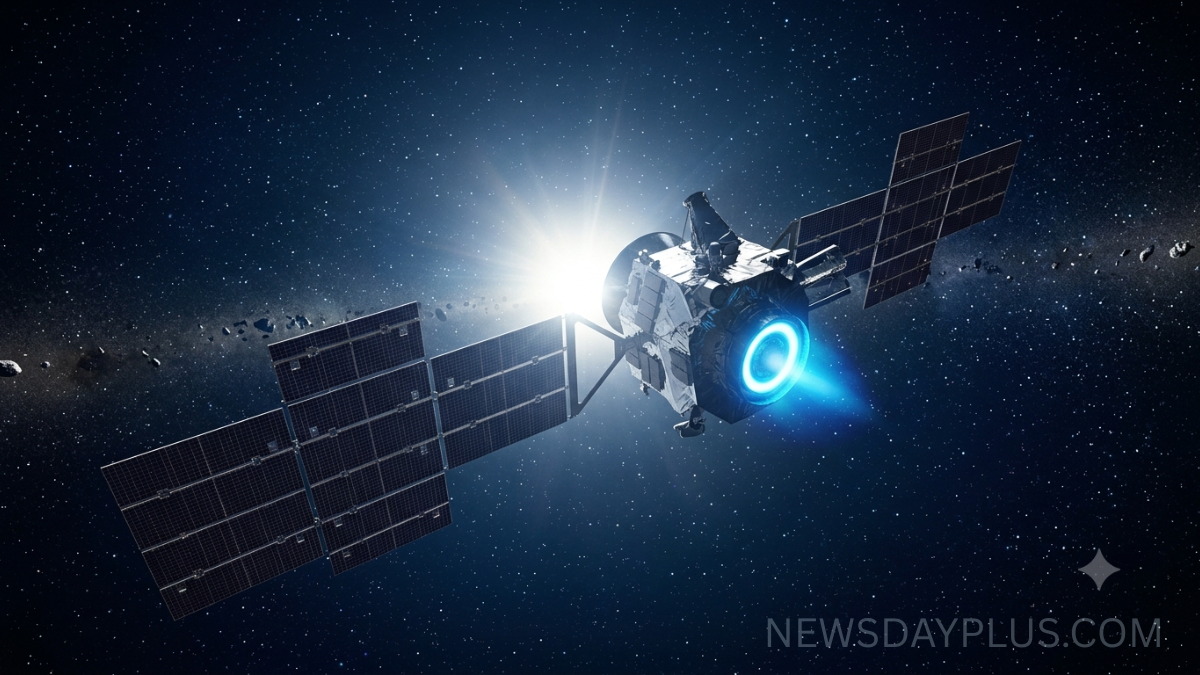
With the Mars flyby complete, Psyche is now cruising onward using its solar-electric propulsion system, headed deeper into the asteroid belt. The spacecraft is expected to enter orbit around asteroid Psyche in August 2029. From there, it will spend roughly two years circling the asteroid at varying altitudes, mapping its surface, gravity field, and magnetic field.
Mission principal investigator Lindy Elkins-Tanton, of the University of California, Berkeley, said the team had been anticipating this Mars flyby for years — and now that it’s done, the next stop is the asteroid itself.
The Bottom Line
NASA’s Psyche mission and its Mars flyby aren’t just a technical milestone — they’re a reminder of humanity’s drive to understand our solar system, and by extension, our own planet. Expect this mission to stay in the headlines over the next few years, and when the spacecraft finally reaches asteroid Psyche in 2029, it could reveal major clues about how planets like Earth actually formed.
Frequently Asked Questions (FAQ)
1. How close did the Psyche spacecraft get to Mars? It passed about 4,609 kilometers (2,864 miles) from the Martian surface.
2. How long until Psyche reaches the asteroid? The spacecraft is expected to enter orbit around asteroid Psyche in August 2029.
3. Why is asteroid Psyche considered so special? Unlike most rocky or icy asteroids, Psyche is believed to be largely made of metal — iron and nickel — possibly the exposed core of an ancient, shattered protoplanet.
4. Is NASA planning to mine the asteroid for its metal? No. The Psyche mission is a pure science mission focused on studying the asteroid — not mining it.
5. When did the Psyche spacecraft launch? It launched in October 2023 and will travel more than 3.6 billion kilometers (2 billion-plus miles) over the course of its journey.

About the Author
Aparna is the founder and editor of NewsDayPlus, where he covers breaking U.S. news, Social Security updates, finance, stock market trends, technology, consumer affairs, and major national events. He researches information from official government agencies, company announcements, and reputable news sources to produce accurate, fact-checked, and reader-friendly articles. His mission is to make complex topics simple, reliable, and useful for everyday readers across the United States.