
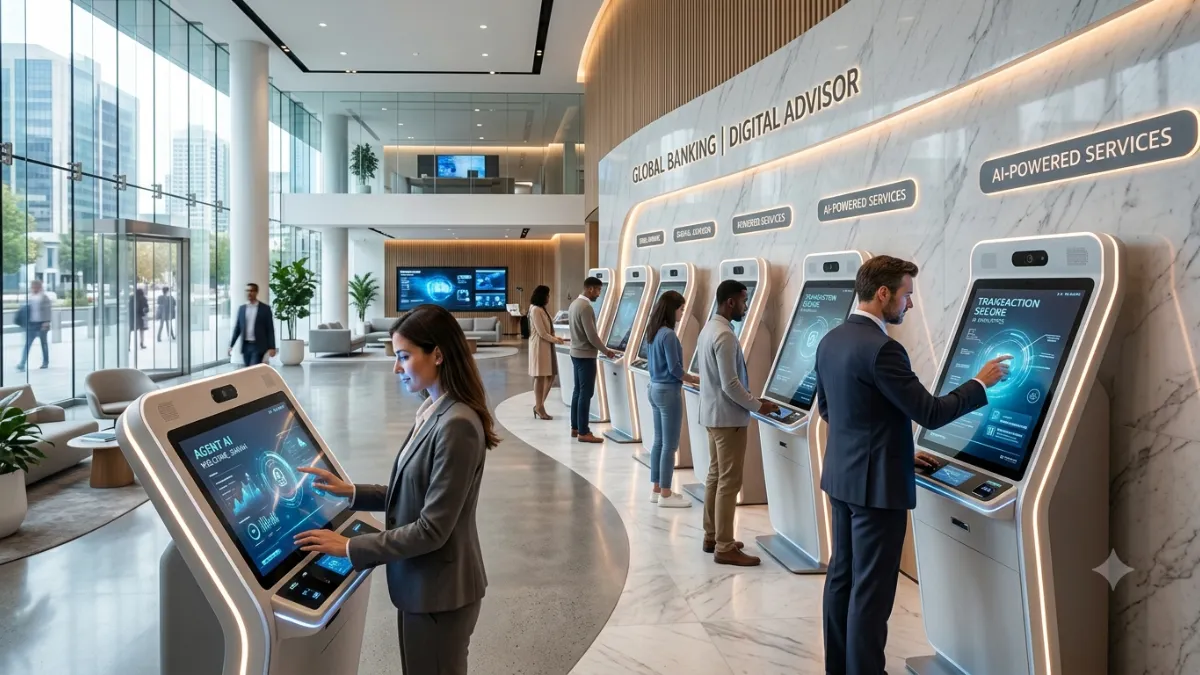
The teller window is vanishing. Across major banks, autonomous AI agents are beginning to replace human staff, handling everything from loan approvals to fraud detection. Analysts say this shift could redefine how millions of people interact with financial institutions.
What’s Happening Inside Banks
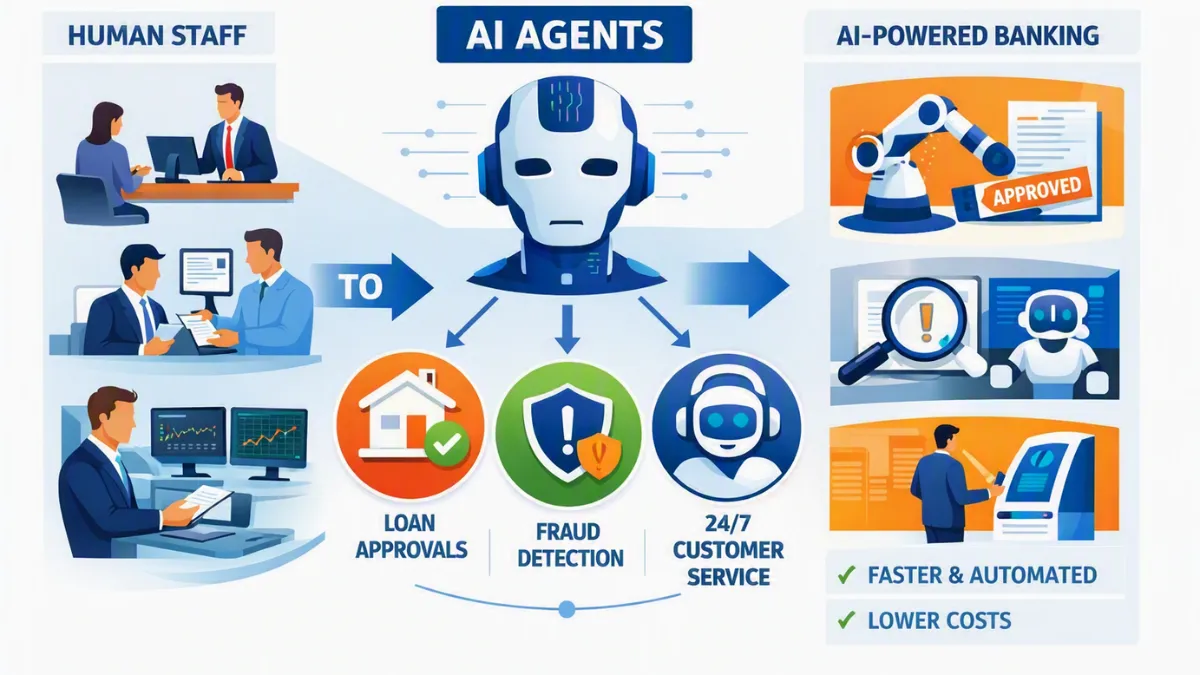
AI agents aren’t just chatbots. They’re autonomous systems capable of making decisions, executing transactions, and learning from customer behavior. JPMorgan Chase, Wells Fargo, and several European banks have already deployed AI-driven platforms that reduce reliance on human staff. These agents can process loan applications in seconds, monitor suspicious activity in real time, and even recommend investment strategies.
Why Banks Are Turning to AI
The motivation is clear: cost savings and efficiency. According to McKinsey, banks could cut operational costs by up to 30% with AI automation. Staffing branches is expensive, and customer expectations for 24/7 service are rising. “AI doesn’t sleep, doesn’t take vacations, and scales instantly,” said fintech analyst Maria Lopez. For banks under pressure from digital-first competitors, AI agents offer a way to stay competitive.
How AI Agents Work
Unlike traditional software, these agents operate with autonomy. They use natural language processing to understand customer queries, predictive analytics to anticipate needs, and machine learning to refine decisions over time. For example, an AI agent might flag unusual spending patterns and freeze a card before fraud occurs. In another case, it could approve a small business loan by analyzing thousands of data points faster than any human underwriter.
Who It Affects Most
Customers will notice fewer human interactions. Routine banking tasks—balance inquiries, transfers, even mortgage pre-approvals—are increasingly handled by AI. For employees, the impact is sharper. Branch staff and mid-level analysts face displacement as banks automate roles once considered secure. “I used to process loan applications all day,” said a former employee at a regional bank. “Now an algorithm does it in minutes.”
Risks and Skepticism
Not everyone is convinced. Critics warn that AI agents may introduce bias, misinterpret complex cases, or fail during crises. Regulators are watching closely, especially after several high-profile algorithmic errors in credit scoring. There’s also the question of trust—will customers feel comfortable when a machine decides their financial fate?
What’s Next for Banking
The trajectory points toward deeper automation. Industry insiders expect AI agents to expand into wealth management, compliance, and even regulatory reporting. Some banks are experimenting with “AI-only branches,” where customers interact exclusively with digital agents. Yet experts caution that human oversight remains essential. “AI can handle scale, but empathy and judgment are still human strengths,” Lopez noted.
The banking sector is entering a hybrid era—machines for speed and scale, humans for nuance and trust. Whether customers embrace this shift will determine how far AI agents go in reshaping finance.

About the Author
Aparna is the founder and editor of NewsDayPlus, where he covers breaking U.S. news, Social Security updates, finance, stock market trends, technology, consumer affairs, and major national events. He researches information from official government agencies, company announcements, and reputable news sources to produce accurate, fact-checked, and reader-friendly articles. His mission is to make complex topics simple, reliable, and useful for everyday readers across the United States.