
Millions of Gen X workers face a “retiring backwards” trend, unable to afford leaving the workforce at 67. Here’s why it’s happening and what’s next.
At 67, many Gen X workers expected to step away from the grind. Instead, millions are finding themselves working longer, downsizing homes, or even returning to jobs they thought they’d left behind. Economists are calling it the “retiring backwards” trend — a reversal of the traditional retirement path.
What the Trend Looks Like
Gen X, born between 1965 and 1980, is now entering retirement age. Yet surveys show nearly half don’t have enough savings to stop working. Instead of retiring, they’re extending careers, taking part-time roles, or relying on gig work to cover expenses. Some are even cashing out retirement accounts early, a move that can erode long-term security.
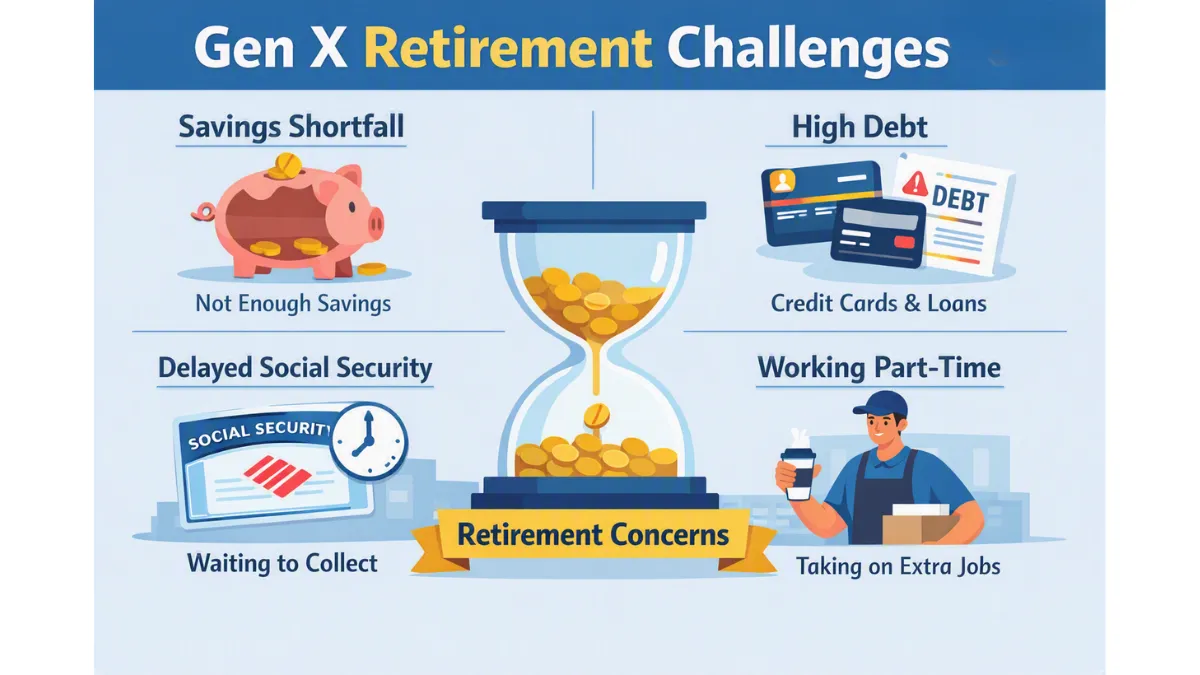
Millions can’t afford retirement at 67
A recent Pew study found that 46% of Gen X households have less than $100,000 saved for retirement. For many, that’s not enough to cover even a decade of living expenses.
Why Gen X Is Struggling
Several factors collide here. Gen X endured two major recessions during peak earning years — the dot-com bust and the 2008 financial crisis. Many also carry debt from mortgages, student loans for their children, or medical bills. Unlike Boomers, fewer Gen X workers have pensions, leaving them dependent on 401(k)s and Social Security.
“Gen X got squeezed between rising costs and stagnant wages,” said financial planner Denise Harper. “They’re the first generation to fully feel the shift from guaranteed pensions to self-funded retirement.”
How It’s Playing Out
Instead of retiring at 67, Gen X workers are delaying Social Security claims to maximize benefits. Others are moving into smaller homes or relocating to lower-cost states. Some are rejoining the workforce after brief retirements, often in lower-paying jobs.
Take the example of Mark, a 68-year-old former IT manager. He retired in 2025 but returned to work within a year after realizing his savings wouldn’t stretch. “I thought I was done,” he said. “Now I’m back consulting just to keep up with bills.”
Who It Affects Most
Middle-income households are hit hardest. Wealthier Gen Xers with diversified investments are more insulated, while lower-income workers often rely solely on Social Security. Women in Gen X face additional challenges, with career breaks for caregiving leading to smaller retirement accounts.
The ripple effects extend to families. Adult children may find themselves supporting parents financially, reversing traditional expectations of inheritance.
Millions can’t afford retirement at 67
What’s Next for Retirement
Experts predict the retiring backwards trend will intensify unless policy changes occur. Rising healthcare costs and uncertain Social Security funding add pressure. Some analysts suggest Gen X may redefine retirement entirely — blending part-time work with leisure rather than fully exiting the workforce.
Still, there’s cautious optimism. Financial literacy programs and catch-up contributions are helping some Gen Xers rebuild savings. Technology-driven side hustles also offer flexible income streams. But the broader reality remains: retirement at 67 is no longer guaranteed.
The story of Gen X retirement is less about leaving work behind and more about adapting to new economic realities. Whether this generation reshapes the very meaning of retirement could set the tone for those who follow.

About the Author
Aparna is the founder and editor of NewsDayPlus, where he covers breaking U.S. news, Social Security updates, finance, stock market trends, technology, consumer affairs, and major national events. He researches information from official government agencies, company announcements, and reputable news sources to produce accurate, fact-checked, and reader-friendly articles. His mission is to make complex topics simple, reliable, and useful for everyday readers across the United States.