
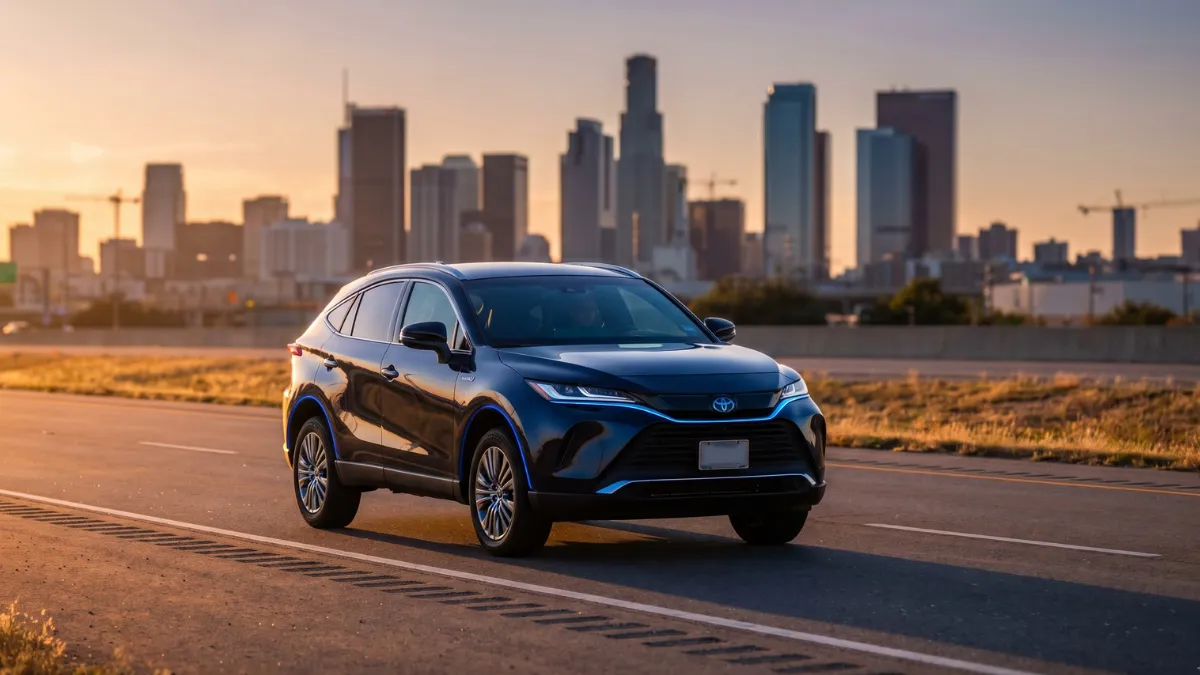
The automaker plans more than 10 new hybrid models for North America by 2030 as U.S. demand accelerates.
Hyundai is making a massive bet on hybrids, and American drivers are already giving it a reason to.
The automaker says it plans to offer more than 10 hybrid models across North America by 2030, with hybrids eventually accounting for about 50% of its regional sales mix. The announcement comes as Hyundai reports record first-half North American sales and says hybrid demand is helping it outperform the broader market.
Hyundai is changing its U.S. strategy
Hyundai’s new plan is bigger than simply adding a few hybrid SUVs to dealer lots.
The company says it will launch or refresh 58 vehicles in North America by 2030 as part of a global plan covering more than 100 models. Hyundai is also increasing North American manufacturing capacity by 500,000 vehicles and plans to raise its local parts-sourcing target to 80%.
That puts hybrids near the center of the strategy.
Hyundai says North American hybrid sales have already passed 1 million cumulative vehicles. During the first six months of 2026, Hyundai and Genesis sold 595,457 vehicles across North America, their best first-half result in the region.
The U.S. is doing much of the heavy lifting.
Hyundai reports 489,656 U.S. sales during the first half of 2026, up 3% from the same period a year earlier. Tucson, Palisade and Hyundai’s growing hybrid lineup are among the products driving that performance.
Why hybrids are suddenly so important
For American drivers, the appeal of a hybrid is easy to understand.
You don’t have to choose between a traditional gasoline vehicle and a fully electric car. A hybrid uses an electric motor and battery to improve efficiency while keeping a gasoline engine for longer trips.
Think of it as having two tools in the same toolbox.
The electric side can help reduce fuel consumption during everyday driving, while the gasoline engine gives drivers more flexibility when they’re traveling hundreds of miles from home.
That’s particularly attractive to people who aren’t ready to plan their lives around charging stations.
Hyundai says rising fuel prices and increasing consumer demand are helping drive the shift toward hybrids. Reuters reports that the company expects hybrids to eventually represent half of its North American sales.
That target would represent a dramatic change in Hyundai’s business.
It also reflects something happening across the U.S. auto industry: consumers aren’t necessarily rejecting electrification. They’re becoming more selective about how they want it.
What Hyundai’s expansion means for American buyers
The biggest impact could be choice.
If Hyundai follows through on its plan, American shoppers will have more opportunities to choose hybrid versions of familiar vehicle types rather than being pushed toward a single powertrain.
That’s important because most Americans don’t buy cars based on technology alone.
They care about monthly payments, fuel costs, cargo space, road-trip convenience, reliability and whether the vehicle fits their family.
A hybrid SUV can make sense for a household that spends Monday through Friday commuting but takes long highway trips on weekends.
The economics can also matter.
A more efficient vehicle can reduce how often you stop at the gas station. Over thousands of miles, those savings can become meaningful, although the actual benefit depends on fuel prices, driving habits, vehicle pricing and financing costs.
Hyundai is also bringing more production closer to its American customers.
The company says its Alabama manufacturing operation and Hyundai Motor Group Metaplant America will produce hybrid vehicles for North America. That means the strategy isn’t simply about importing more cars; it’s increasingly about building them in the region.
Hyundai isn’t giving up on EVs
Here’s where the strategy gets more interesting.
Hyundai isn’t abandoning electric vehicles.
The company still expects electrified vehicles to represent 60% of its global sales by 2030, up from 23% in 2025. It also plans a new extended-range electric vehicle, or EREV, in North America beginning in 2027.
The first North American EREV is planned as a Santa Fe-based vehicle.
Hyundai says it expects the model to deliver more than 600 miles of total range and plans to build it at Hyundai Motor Manufacturing Alabama.
That’s a striking number.
A 600-plus-mile vehicle sounds almost unreal when you compare it with the range anxiety that has slowed some EV shoppers.
The EREV approach attempts to bridge the gap. It can deliver an electric driving experience while using another power source to extend overall range, giving drivers more flexibility on long trips.
For Hyundai, the message is clear: America doesn’t need one kind of electrification. It needs several.
Critics see a crowded strategy
There are reasons to be skeptical.
Hyundai is planning an enormous product expansion while facing uncertain U.S. trade policies, tariffs and changing rules around vehicle manufacturing. Reuters reports that those factors could complicate the company’s investment and profitability plans.
There is also the question of whether Americans will actually buy hybrids at the scale Hyundai expects.
A 50% hybrid sales mix is an ambitious target.
Consumer preferences can change quickly, especially when gasoline prices, EV incentives, interest rates and vehicle prices move in different directions.
But Hyundai has a strong argument on its side: the company isn’t waiting for customers to choose between gasoline and full electric.
It’s giving them another option.
That flexibility could become valuable if EV adoption grows more slowly than some automakers once expected while consumers continue demanding better fuel economy.
What comes next for Hyundai
The next few years will show whether Hyundai’s hybrid strategy becomes a competitive advantage or simply another crowded product push.
The company plans to introduce the new Tucson and Tucson Hybrid in initial markets during the fourth quarter. It also expects its North American manufacturing expansion to support the larger lineup through 2030.
Watch the Tucson, Santa Fe and Palisade closely.
These vehicles sit in segments that matter enormously to American families, and successful hybrid versions could help Hyundai gain market share without requiring customers to make a full jump into battery-electric vehicles.
At the same time, Hyundai will continue developing EVs, extended-range vehicles, autonomous-driving technology and other advanced systems.
That makes the company’s strategy less about choosing between gas and electric and more about giving consumers multiple paths forward.
For American car buyers, that’s probably the most important development.
The next big shift in American cars may not be from gasoline to electric—it may be toward giving drivers more ways to electrify on their own terms.

About the Author
NewsDayPlus Editorial Team
The NewsDayPlus Editorial Team creates accurate, easy-to-understand content covering cars, motorcycles, electric vehicles, automotive technology, vehicle launches, prices, reviews, and industry news.
Our team researches information from reliable and official sources and aims to keep articles useful and up to date.
We are committed to accuracy, transparency, and reader-focused automotive journalism.
For corrections or editorial questions, please contact the NewsDayPlus team through our Contact Us page.
NewsDayPlus Editorial Team
NewsDayPlus.com