
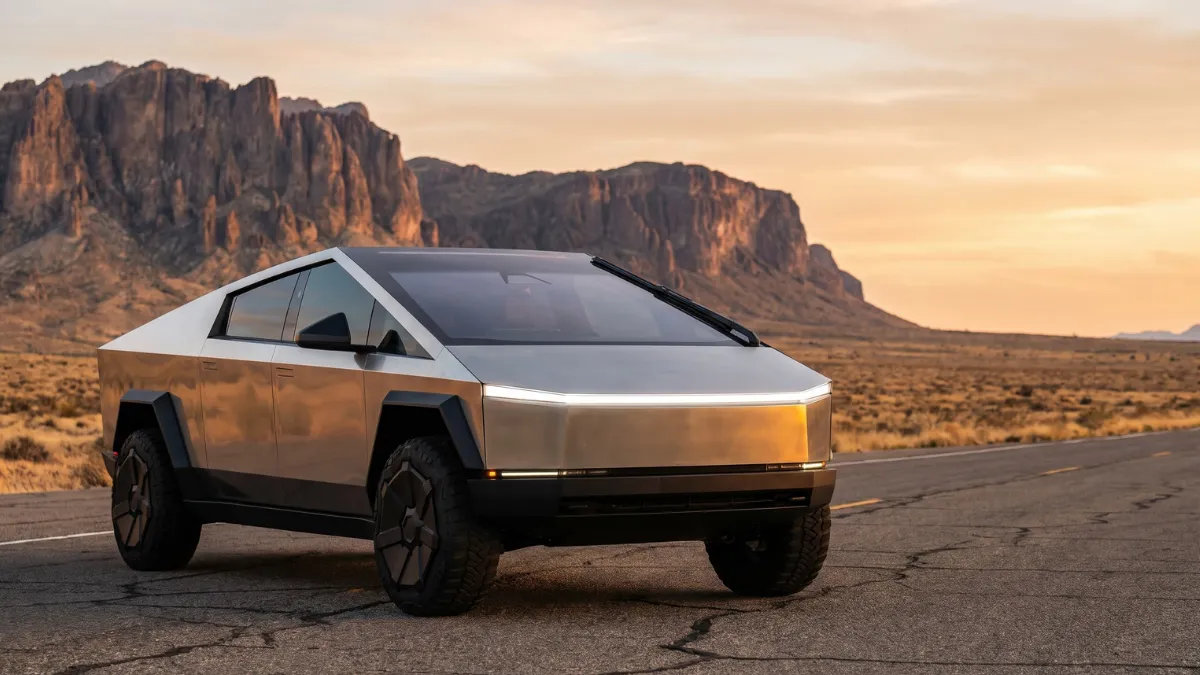
The latest increase pushes two Cybertruck versions higher as Tesla faces a tougher U.S. truck market.
Tesla is making its Cybertruck more expensive again, and this time buyers aren’t getting an obvious upgrade in return.
The automaker has raised U.S. prices for its Dual Motor and Premium All-Wheel Drive Cybertruck by $5,000 each. Reuters reports that the Dual Motor version now starts at $74,990, while the all-wheel-drive model rises to $84,990.
The change took effect this week.
Tesla hasn’t publicly announced a major new feature package tied to the increase. Instead, the higher prices appeared in the company’s online ordering system, making the move particularly striking for shoppers already watching the Cybertruck’s rapidly changing pricing history.
The Cybertruck just got more expensive
For someone shopping for a new truck, $5,000 isn’t a tiny adjustment.
It’s enough to change a monthly car payment, increase the amount of interest paid over a loan and potentially push a vehicle into a different budget category.
The Dual Motor Cybertruck now carries a $74,990 starting price before destination, taxes and other fees, according to Reuters. The Premium All-Wheel Drive version reaches $84,990 before those additional costs.
That makes the pricing story more complicated than a simple “Tesla raises prices” headline.
Tesla has repeatedly changed Cybertruck pricing since the pickup’s launch. The company briefly offered a lower-priced Dual Motor configuration earlier in 2026, but that promotional price lasted only 10 days, Reuters reports.
The latest move shows just how quickly the economics of this unusual electric pickup can change.
Why the $5,000 increase matters
The Cybertruck already occupies a premium corner of the pickup market.
Its stainless-steel body, unusual angular design, large battery and advanced technology make it very different from conventional trucks such as the Ford F-150, Chevrolet Silverado and Ram 1500.
But buyers still compare prices.
That’s where the latest increase could become important.
Imagine you’re shopping for a house and the seller suddenly adds $5,000 to the asking price without changing the kitchen, roof or number of bedrooms. You might still love the house, but you’d probably stop and ask why.
That’s essentially the question Cybertruck shoppers face now.
Tesla’s website currently lists the Premium All-Wheel Drive Cybertruck at a starting purchase price of $87,235 including destination and order fees, before incentives, taxes and other charges.
The actual price a buyer pays can therefore move considerably higher than the headline MSRP.
For families already stretching their budgets, that difference matters.
A $5,000 increase can also affect financing. Depending on the loan rate and term, the extra cost can add a noticeable amount to the monthly payment.
Tesla’s pricing history makes this unusual
The Cybertruck hasn’t followed a normal pricing path.
When Tesla first revealed the vehicle in 2019, the company talked about a starting price around $39,000 for a single-motor version.
That truck never reached the market at that price.
Tesla eventually launched the Cybertruck at much higher prices, and it has repeatedly adjusted the lineup since then. Car and Driver reports that the company previously discontinued the cheaper rear-wheel-drive model after briefly offering it, while other versions have experienced substantial price changes.
The Cyberbeast has experienced its own dramatic pricing swings.
Tesla increased that tri-motor model by $15,000 in August 2025 before later reversing the change.
Now two mainstream Cybertruck configurations are moving upward again.
For potential buyers, that creates uncertainty.
If you’re ordering today, you know the current price. But Tesla’s history suggests you shouldn’t assume today’s number will remain unchanged for long.
What buyers actually get
The Cybertruck remains an unusual technical package.
Tesla says the truck can tow up to 11,000 pounds, carry up to 2,500 pounds of payload and deliver an estimated range of up to 325 miles on its current U.S.-market configurations, depending on version and configuration.
It also offers features that distinguish it from traditional pickups.
Tesla’s Powershare system can use the Cybertruck’s battery to provide electricity to a compatible home during an outage. Tesla says an equipped Cybertruck can power an average home for more than three days under its stated conditions.
That is genuinely remarkable.
A pickup that can double as a giant emergency battery changes how you think about the vehicle.
For someone living in an area affected by storms or power outages, that capability could be more valuable than another horsepower number on a specification sheet.
But none of those capabilities are new this week.
That’s why the price increase is getting attention.
The human side is harder to ignore
Cybertruck buyers tend to have more choices than the average EV shopper.
They can consider electric pickups from Ford, Chevrolet, GMC, Rivian and others. They can also choose a conventional gasoline or hybrid truck if charging infrastructure doesn’t fit their lifestyle.
The Cybertruck’s biggest challenge isn’t simply convincing people that electric trucks work.
It’s convincing them that this particular electric truck is worth the money.
At nearly $75,000 before destination and other costs, the Dual Motor model is no longer competing primarily on affordability.
It’s competing on design, technology, performance, brand appeal and the ownership experience.
For some buyers, that will be enough.
For others, the latest increase could be the moment they start looking elsewhere.
And that’s particularly important because the Cybertruck is still a relatively unusual choice for American truck buyers.
A traditional pickup buyer may care more about towing, payload, bed functionality, service availability and long-distance convenience than about having the most futuristic-looking truck in the parking lot.
Critics see a risky move
Critics can reasonably argue that raising prices without an obvious new feature makes the Cybertruck harder to justify.
The truck has already faced recalls, quality-control criticism and fluctuating pricing since its launch. Reuters notes that these issues have contributed to challenges sustaining market interest.
A higher price could make that challenge more difficult.
But Tesla has another argument.
The company isn’t selling the Cybertruck as an ordinary pickup. Its stainless-steel exoskeleton, electric powertrain, advanced software and unique energy features give it a different value proposition.
Tesla also continues to support the truck with features such as Full Self-Driving (Supervised), though the system requires active driver supervision and is sold separately.
So the debate isn’t really about whether the Cybertruck has technology.
It clearly does.
The debate is whether that technology justifies asking buyers for another $5,000.
What happens next
The next few months could reveal whether Tesla’s latest pricing move affects Cybertruck demand.
Watch inventory, delivery estimates, incentives and financing offers closely.
Tesla’s own website says Cybertruck lease offers are currently based on a Premium All-Wheel Drive starting purchase price of $87,235 including destination and order fees.
That could make leasing more attractive to some shoppers who don’t want to commit to the full purchase price.
The bigger question is what Tesla does next.
Will prices rise again? Will Tesla introduce another lower-cost configuration? Or will the company eventually stabilize the lineup and focus on improving demand?
For now, one thing is clear.
The Cybertruck’s price journey remains almost as unpredictable as its design.
For Cybertruck shoppers, the question isn’t just whether Tesla built the future—it’s how much Tesla wants you to pay for it.

About the Author
NewsDayPlus Editorial Team
The NewsDayPlus Editorial Team creates accurate, easy-to-understand content covering cars, motorcycles, electric vehicles, automotive technology, vehicle launches, prices, reviews, and industry news.
Our team researches information from reliable and official sources and aims to keep articles useful and up to date.
We are committed to accuracy, transparency, and reader-focused automotive journalism.
For corrections or editorial questions, please contact the NewsDayPlus team through our Contact Us page.
NewsDayPlus Editorial Team
NewsDayPlus.com
Logging into 78zinwin now. Looks promising, hoping for a big win! You can use the login link for yourself right here at 78zinwin and let’s get lucky together!