
The Fathom arrives in 2027 with a price aimed squarely at mainstream American truck buyers.
Ford is betting that Americans want electric trucks—if they can actually afford them.
The company is preparing the Ford Fathom, a midsize electric pickup with a starting price of $28,350, for the North American market in 2027. The truck is the first vehicle built on Ford’s new Universal Electric Vehicle platform, a strategy designed to cut production costs while bringing EVs closer to mainstream buyers.
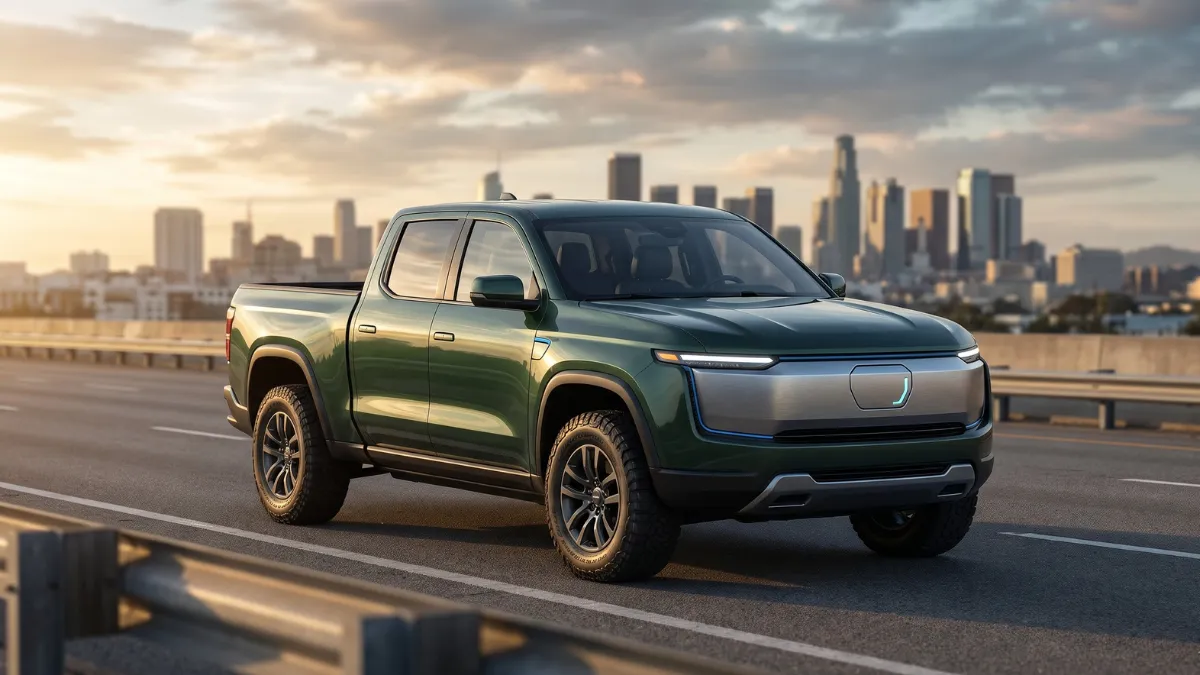
Ford is taking aim at the affordable EV market
The Fathom is arriving at an important moment for electric vehicles.
For years, electric pickups have carried premium prices. Ford’s new approach is different: instead of asking buyers to spend heavily for an electric truck, it’s trying to build one around a price that looks much closer to an ordinary compact pickup.
The $28,350 starting price applies to the standard-range battery configuration. Ford says the truck will reach North American customers beginning in 2027.
That price puts the Fathom in striking territory.
For comparison, Ford’s current 2026 Maverick starts at $28,145, meaning the upcoming electric Fathom sits only about $200 above the current base Maverick’s starting MSRP before destination and other charges.
That’s the part that makes this story interesting.
The Fathom isn’t trying to win the electric-truck market by being the biggest or fastest truck on the road. It’s trying to make an electric pickup feel financially normal.
Why the Fathom matters to American drivers
For many Americans, the biggest barrier to an EV isn’t the technology.
It’s the price.
A family might like the idea of electric driving but still need a practical vehicle for commuting, groceries, home-improvement projects and weekend trips. A pickup can make sense because it combines passenger space with an open bed.
Ford says the Fathom seats five adults and includes both a pickup bed and a front storage compartment, known as a frunk.
It also includes bidirectional charging capability, meaning the truck can potentially send electricity back out to power compatible equipment or other devices.
Think of that as turning your pickup into a giant portable power bank.
That’s more than a party trick for campers. For contractors, homeowners and outdoor enthusiasts, having electricity available at the job site or campsite can be genuinely useful.
The Fathom also supports Apple CarPlay and Android Auto and offers Ford’s BlueCruise hands-free driving technology.
Ford is changing how it builds EVs
The biggest story may actually be hiding inside the factory.
Ford is rebuilding its Louisville Assembly Plant in Kentucky around a new manufacturing system designed specifically for its next generation of electric vehicles.
The company says it has invested $2 billion in transforming the plant. Ford expects the new production system to assemble the Fathom 40% faster than the plant’s previous products, with the final process expected to remain about 15% faster after Ford reinvests some of those gains into automation and quality improvements.
That is a major manufacturing experiment.
Instead of moving a nearly complete vehicle down one traditional assembly line, Ford’s new system separates the vehicle into three major sections: the front, rear and battery.
Those sections move through their own assembly processes before coming together.
Ford calls the approach an “assembly tree.” The goal is to reduce parts, simplify manufacturing and give workers easier access to components during assembly.
And there’s a bigger reason for doing this.
If Ford can build EVs more efficiently, it has more room to lower prices without sacrificing its margins.
That’s the real game behind the $28,000 number.
The human side of Ford’s EV gamble
The Fathom could matter most to buyers who have been priced out of electric trucks.
A $60,000 or $70,000 electric pickup is a very different financial proposition from a vehicle starting in the high-$20,000 range.
Even after taxes, destination charges, options and financing costs, the Fathom’s starting point could put an electric truck within reach of people who never considered one before.
But the actual monthly payment will depend on the final transaction price, financing rate, down payment, taxes and other costs.
That’s important because a low starting MSRP doesn’t automatically mean a cheap vehicle.
Trim levels, battery upgrades and options can push the final price substantially higher.
Still, the psychological effect of a sub-$30,000 starting price could be powerful.
You don’t need to convince a buyer that an EV is worth $70,000. You first need to convince them that an electric truck can fit into the same shopping conversation as a conventional compact pickup.
Ford is clearly trying to do exactly that.
The $28,000 question isn’t as simple as it looks
There are reasons to remain skeptical.
First, the Fathom doesn’t arrive until 2027. Ford still has to complete development, begin production and prove that the truck can meet its price target at scale.
Second, the advertised starting price won’t tell the whole story.
American buyers will want to know the Fathom’s real-world range, charging speed, towing capacity, payload, battery options and pricing for higher trims.
Those details could determine whether the truck becomes a genuine value leader or simply another EV with an attractive headline price.
Ford also faces intense competition.
Automakers are searching for ways to reduce EV costs while consumers remain sensitive to interest rates, vehicle prices and charging convenience. Ford’s own earlier Universal EV strategy targeted a roughly $30,000 starting price for its first midsize electric pickup, showing how central affordability has become to the company’s EV plans.
But Ford has something going for it that many EV startups don’t.
It already knows how to build trucks.
The company has spent generations selling pickups to American buyers, and the Fathom is designed around that experience rather than trying to invent an entirely new customer.
What happens next
The next major milestone comes in 2027, when Ford plans to begin customer deliveries.
Before that happens, buyers will want much more information about final specifications, production timing, range and pricing.
Ford is already moving toward prototype production at Louisville Assembly Plant. The company says prototype builds with production-qualified parts are on track for the first quarter of 2027, followed by customer vehicles later that year.
The Fathom also matters because Ford isn’t designing the Universal EV platform for one vehicle.
The company says the platform can support a family of affordable electric vehicles across different body styles, potentially allowing the manufacturing investment to spread beyond the pickup.
If Ford gets the economics right, the Fathom could become more than an affordable electric truck.
It could become the test case for whether Detroit can finally build EVs for ordinary American budgets.
The electric truck revolution may not begin with the most powerful pickup—it may begin with the one Americans can actually afford.

About the Author
NewsDayPlus Editorial Team
The NewsDayPlus Editorial Team creates accurate, easy-to-understand content covering cars, motorcycles, electric vehicles, automotive technology, vehicle launches, prices, reviews, and industry news.
Our team researches information from reliable and official sources and aims to keep articles useful and up to date.
We are committed to accuracy, transparency, and reader-focused automotive journalism.
For corrections or editorial questions, please contact the NewsDayPlus team through our Contact Us page.
NewsDayPlus Editorial Team
NewsDayPlus.com
Hey, I tried to enter genzobetgiris and the page does not charge properly, did it happen to someone else? Let me know here
I have been a regular for months and the loyalty rewards here actually make a real difference. The customer care team is super responsive and always ready to help with any question. It feels like a warm community where new and experienced players alike can thrive. I truly enjoy my time here and the experience keeps getting better.
Thank you for your sharing. I am worried that I lack creative ideas. It is your article that makes me full of hope. Thank you. But, I have a question, can you help me?