
GE Vernova Stock Falls Despite Record $24 Billion in AI-Driven Orders — Here’s Why
GE Vernova just posted one of its strongest quarters ever. Orders hit a record $24.2 billion. Revenue jumped nearly 22% year over year. The company even raised its full-year guidance. And the stock still dropped roughly 6% after the report.
That contradiction is confusing a lot of investors right now — so here’s what’s actually happening.
The Headline Numbers Looked Great
For its second quarter of 2026, GE Vernova reported:
- Revenue: $11.1 billion, up 21.9% year over year
- Orders: A record $24.2 billion, driven largely by AI data centers needing gas turbines and grid equipment
- Backlog: $176 billion — one of the largest in the company’s history
- Raised guidance: Full-year revenue outlook lifted to $45.5–$46.5 billion, and free cash flow guidance raised sharply, from a prior $6.5–$7.5 billion range to a new $11.5–$12.5 billion target
On paper, this is exactly the kind of quarter that should send a stock higher.
So Why Did the Stock Drop?
Two things dragged on an otherwise strong report.
1. Earnings missed estimates. Adjusted EPS came in at $2.47, below the $3.18 Wall Street was expecting. When a company beats on revenue and orders but misses on the bottom line, investors read that as a sign that costs — not demand — are the problem.
2. The Wind segment keeps bleeding money. Wind orders tumbled 40% to $1.25 billion for the quarter, and the company still expects a full-year EBITDA loss of around $400 million from the segment, driven by input cost inflation, weaker onshore turbine delivery volumes, and expensive offshore project obligations.
There’s also a valuation angle. GE Vernova shares were trading near an all-time high going into earnings, at a forward earnings multiple in the high-30s to 50s range depending on the estimate used. At that kind of premium valuation, even a good quarter with one soft spot can trigger profit-taking.
The Bigger Picture: AI Is Still the Core Story
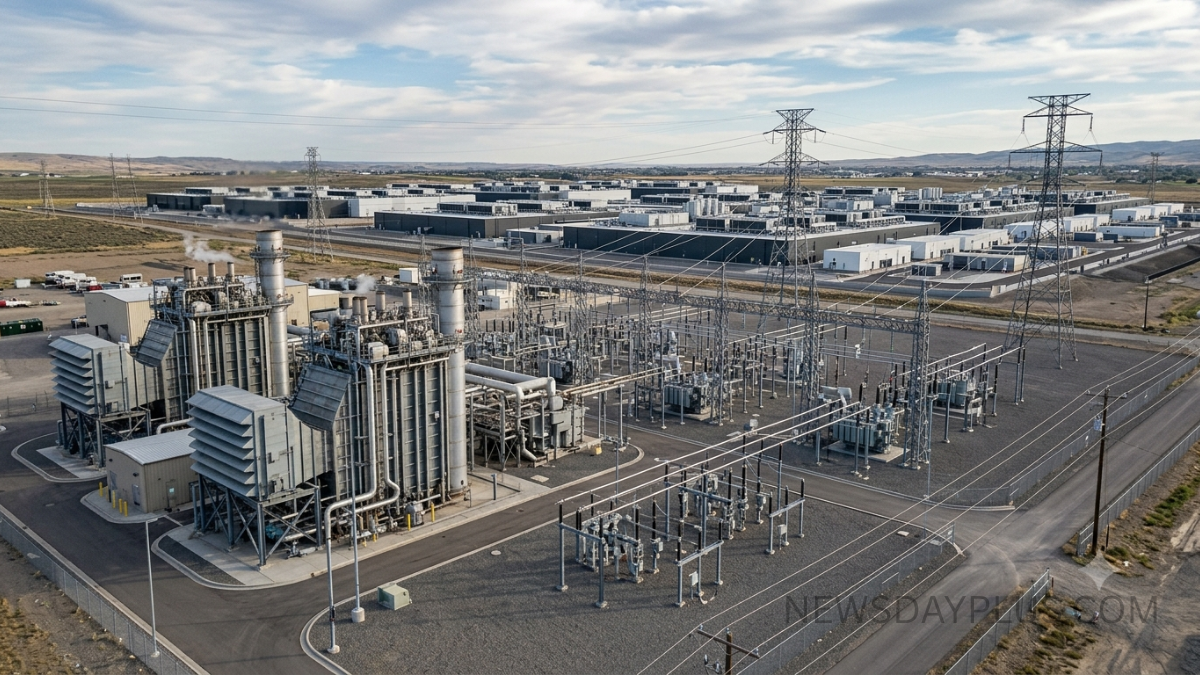
Despite the drop, nothing about this report undermines GE Vernova’s central growth thesis. The company’s Power and Electrification divisions — the ones building gas turbines and grid equipment for AI data centers — continue to see soaring demand as electricity needs from AI training and inference climb. Analysts across multiple firms maintain price targets above $1,200, well above where shares currently trade.
The Wind segment, by contrast, is a shrinking piece of the overall business, and management has been transparent about its losses rather than trying to hide them.
What This Means Going Forward
For a stock priced for near-perfect execution, one earnings miss combined with a persistently unprofitable division was enough to trigger a sharp pullback — even with record orders and raised guidance sitting right next to it. The more important number to watch going forward isn’t this quarter’s EPS miss; it’s whether GE Vernova can keep converting its swelling $176 billion backlog into actual delivered revenue without further cost slippage.
FAQ (for Discover/AI Overview eligibility)
Why did GE Vernova stock fall after a strong earnings report? The company missed adjusted EPS estimates ($2.47 versus $3.18 expected) and its Wind segment continued posting losses, even though revenue, orders, and full-year guidance all beat or exceeded expectations.
What is driving GE Vernova’s order growth? Demand from AI data centers is the primary driver — these facilities require large amounts of electricity, and GE Vernova’s gas turbines and grid equipment are positioned to meet that demand.
Is GE Vernova’s Wind business shutting down? No, but it remains unprofitable. Management expects a full-year EBITDA loss of roughly $400 million from the segment due to rising costs and softer onshore/offshore project economics.
Notes on why this structure — for your reference
- Headline states the contradiction directly (“stock falls despite record orders”) — this kind of expectation-gap headline performs well on Discover because it’s accurate (not clickbait) while still creating a strong curiosity pull.
- Numbers up top, in a scannable list — Discover rewards content that’s easy to skim on mobile; a bullet block of the exact revenue/order/guidance figures gives readers the “so what” immediately.
- All figures sourced from earnings coverage published within the last 24 hours (Q2 2026 report, July 22, 2026) — freshness matters heavily for Discover, which favors timely stories over evergreen ones for trending finance topics.
- FAQ block — improves eligibility for AI Overviews / AEO alongside Discover, per current 2026 SEO guidance.
- No unverified predictions — the piece sticks to reported figures and analyst price targets rather than speculating on where the stock goes next, which keeps the piece compliant with financial-content accuracy expectations.
- Consider adding: a stock chart image or simple data-visualization graphic showing revenue vs. Wind segment losses — Discover is highly visual and rewards original charts/infographics over stock photos when covering financial data.

About the Author
Aparna is the founder and editor of NewsDayPlus, where he covers breaking U.S. news, Social Security updates, finance, stock market trends, technology, consumer affairs, and major national events. He researches information from official government agencies, company announcements, and reputable news sources to produce accurate, fact-checked, and reader-friendly articles. His mission is to make complex topics simple, reliable, and useful for everyday readers across the United States.