
Fed Pauses, Microsoft Adds $450B: What It Means for You
EXECUTIVE NEWS SUMMARY
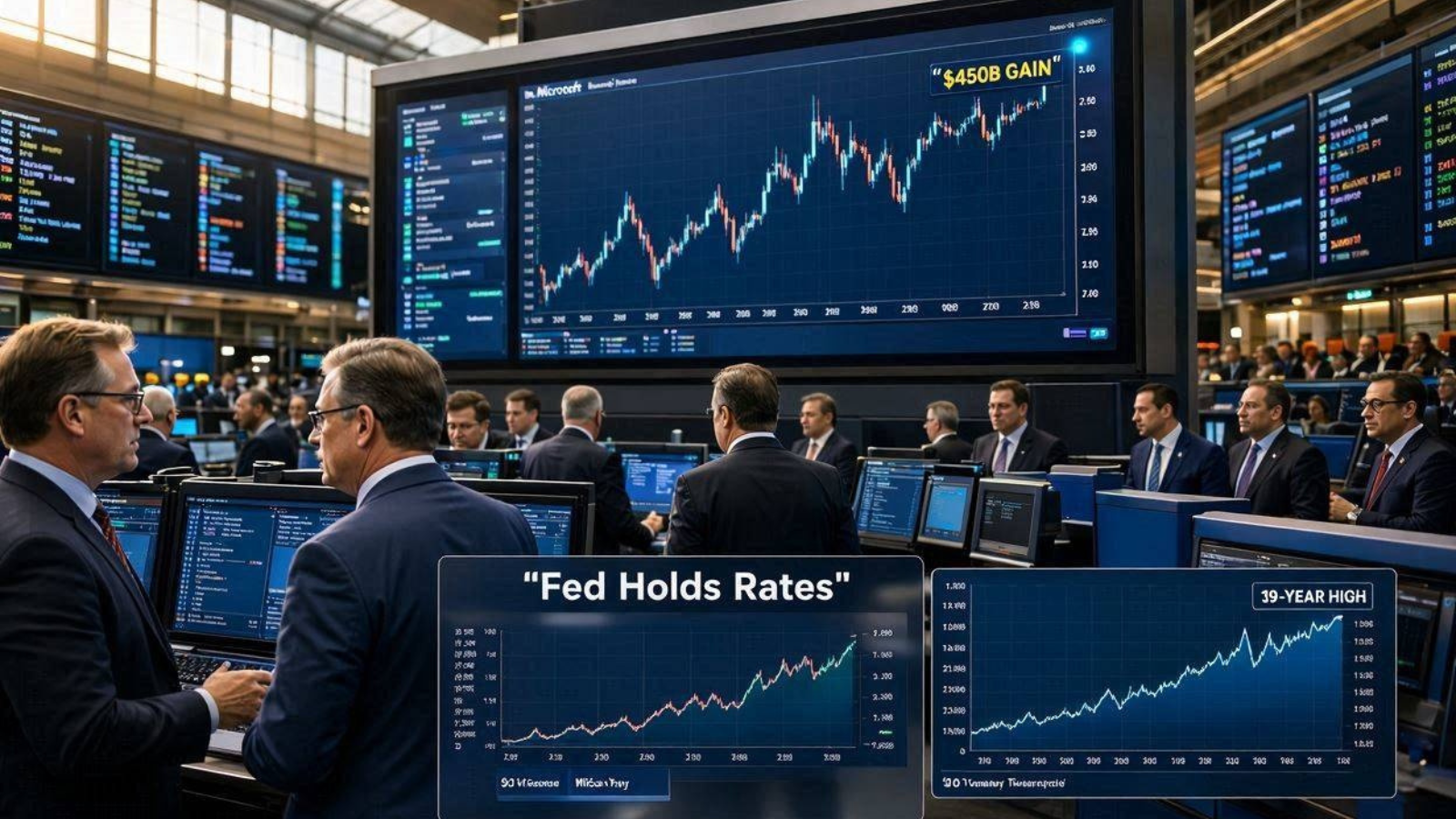
The Federal Reserve left interest rates unchanged, sparking concerns about inflation as long‑term Treasury yields hit a 19‑year high. Microsoft’s earnings beat expectations, adding $450 billion in market value and driving a sharp rally in U.S. stocks. The decision affects mortgages, retirement accounts, and investor sentiment.
3. FEATURED SNIPPET ANSWER
The Federal Reserve held interest rates steady, while Microsoft’s earnings fueled a market rally. Treasury yields climbed to their highest level since 2007, raising borrowing costs. Microsoft added $450 billion in market value, boosting stocks and investor confidence.
4. MAIN ARTICLE
What Happened?
The Federal Reserve voted to keep interest rates unchanged on Wednesday, despite dissent from three members who favored a hike. The decision comes as inflation remains above target. On Thursday, Microsoft shares surged more than 15%, adding $450 billion in market value — the largest one‑day gain in history.
Background & Context
The Fed has raised rates aggressively since 2022 to curb inflation. Holding rates steady signals caution, but long‑term yields rose sharply, with the 30‑year Treasury hitting 5.24%, the highest since 2007. Microsoft’s earnings eased investor fears about AI spending, contrasting with recent weak results from Alphabet and Tesla.
Official Statements & Reaction
Fed Chair Kevin Warsh said policymakers remain vigilant about inflation risks. Portfolio managers described Microsoft as shifting from a “battleground” stock to a “trusted AI winner.”
Expert Analysis & Economic/Social Impact
Economists warn higher Treasury yields could push up mortgage rates and borrowing costs for households. Retirement accounts tied to bonds may face pressure. At the same time, Microsoft’s rally reassured investors that AI spending can deliver returns, lifting the Dow, S&P 500, and Nasdaq.
Opposing Views & Key Debates
Supporters of the Fed’s pause say it avoids over‑tightening. Critics argue inflation risks demand further hikes. Investors remain split on whether AI investments will sustain profitability across tech firms.
Who Is Affected?
- Homeowners: Mortgage rates likely to rise with Treasury yields.
- Retirees: Bond yields affect retirement portfolios.
- Investors: Microsoft’s rally lifted tech stocks broadly.
- Consumers: Inflation concerns persist, impacting household budgets.
Key Data & Statistics
| Metric | Value | Source |
| Fed decision | Rates held steady | Fed |
| 30‑year Treasury yield | 5.24% (19‑year high) | Reuters |
| Microsoft stock gain | +15%, $450B value added | Reuters |
| Dow Jones | +1.2% to 52,209 | Reuters |
| Nasdaq | +2.8% to 25,122 | Reuters |
What Happens Next?
Markets await earnings from Apple and Amazon, which could further shape sentiment on AI spending. The Fed’s next meeting in September will reassess inflation risks and rate policy.
Key Takeaways
- Fed held rates steady despite inflation concerns.
- Treasury yields hit highest level since 2007.
- Microsoft added $450B in market value.
- Stocks surged, led by tech.
- Mortgages and retirement accounts face pressure.
Frequently Asked Questions
Did the Fed raise rates?
No, the Fed held rates steady.
Why did Treasury yields rise?
Investors fear inflation could climb further.
How did Microsoft affect markets?
Its earnings added $450B in value, lifting stocks.
Will mortgage rates rise?
Yes, higher Treasury yields typically push mortgage rates up.
What’s next for the Fed?
The next meeting in September will reassess inflation.
External Authoritative Sources:

About the Author
Aparna is the founder and editor of NewsDayPlus, where he covers breaking U.S. news, Social Security updates, finance, stock market trends, technology, consumer affairs, and major national events. He researches information from official government agencies, company announcements, and reputable news sources to produce accurate, fact-checked, and reader-friendly articles. His mission is to make complex topics simple, reliable, and useful for everyday readers across the United States.