
General Motors is offering a new path for some affected owners as federal scrutiny over its troubled 6.2-liter V8 intensifies.
GM’s engine problem is getting harder to contain.
General Motors’ L87 V8 engine recall is entering a new and more complicated phase, with reports that affected owners may receive access to a targeted Employee Pricing program while federal regulators expand scrutiny of nearly one million GM trucks and SUVs. The move comes as complaints continue to raise questions about whether earlier recall repairs fully solved the engine-failure problem.
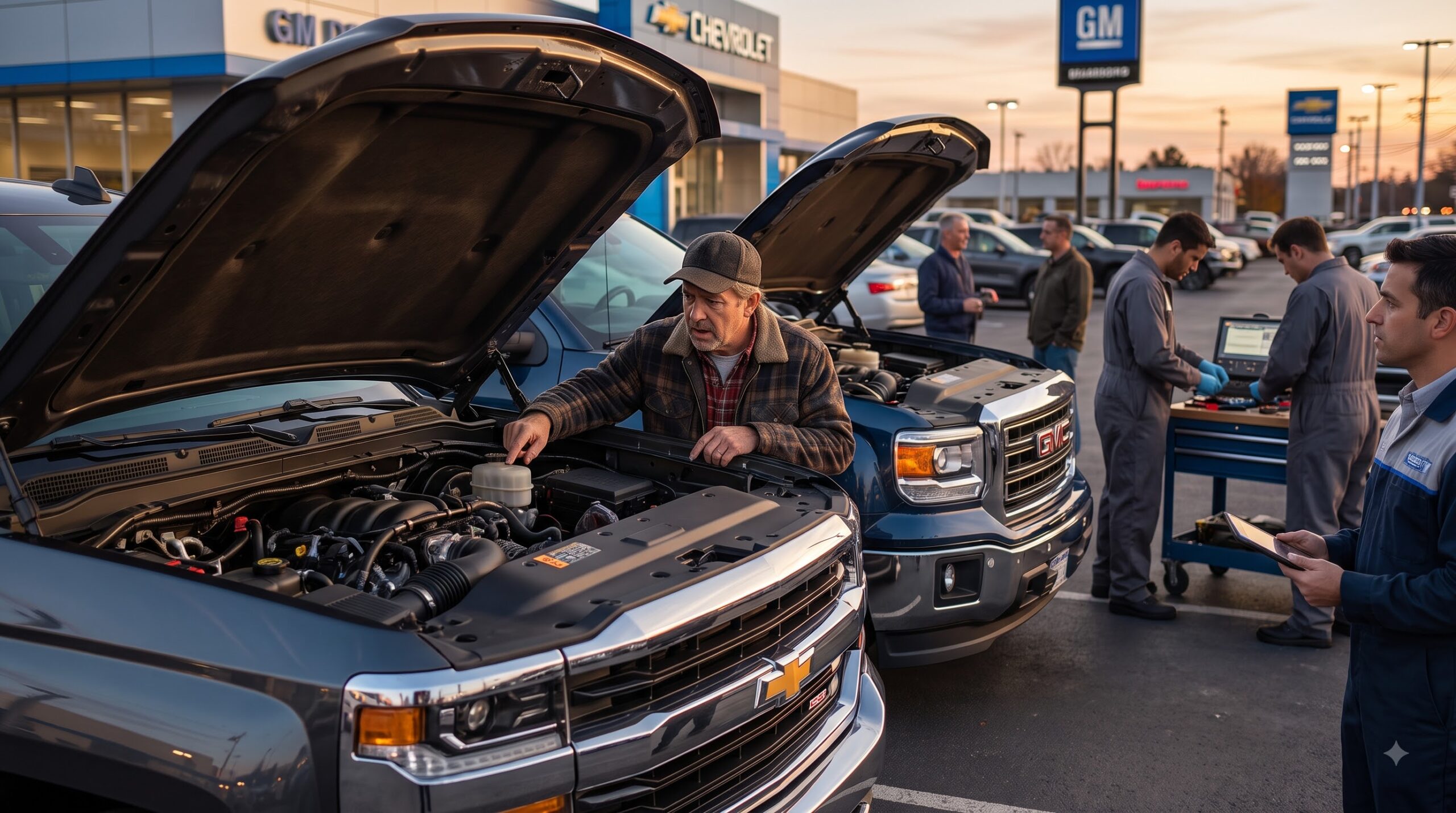
For owners, the timing feels significant.
A recall is supposed to provide a clear answer: identify the problem, fix the vehicle, and move forward. But the L87 story has become much messier, with additional failures reported even after some vehicles received recall work.
The Recall Is Now Part of a Bigger Investigation
The L87 is GM’s 6.2-liter V8 engine, used in some of the company’s most popular and expensive trucks and SUVs.
That includes vehicles such as the Chevrolet Silverado 1500, Chevrolet Tahoe, Chevrolet Suburban, GMC Sierra 1500, GMC Yukon, Cadillac Escalade, and Cadillac Escalade ESV.
These aren’t niche vehicles.
They’re family SUVs, work trucks, road-trip machines, and luxury vehicles that can cost tens of thousands of dollars. For many Americans, they’re the kind of vehicle purchased with the expectation that the engine will last for years.
That’s why the federal investigation has become so important.
NHTSA has escalated its review into an engineering analysis covering nearly one million GM vehicles equipped with the L87 engine from model years 2021 through 2026. The investigation follows continuing reports of engine failures, including complaints involving vehicles that had already received recall-related repairs.
The original U.S. recall involved roughly 600,000 vehicles and focused on manufacturing defects involving internal engine components.
Those defects could lead to catastrophic engine damage and a sudden loss of propulsion while driving.
And that’s the phrase that gets every driver’s attention.
Loss of propulsion.
Imagine pulling onto a highway with your family inside the vehicle when the engine suddenly stops delivering power. You still have a large vehicle moving through traffic, but your ability to accelerate and maintain speed changes instantly.
That’s why this isn’t simply an inconvenience.
It’s a safety issue.
Why GM’s Employee Pricing Program Is Raising Eyebrows
Reports this week indicate that GM introduced a targeted Employee Pricing program for customers affected by the L87 recall.
According to documentation reviewed by CarsDirect, eligible owners may receive authorization codes allowing them to purchase or lease most 2026 GM vehicles and certain 2027 models at Employee Pricing. The offer was reportedly transferable to members of the same household and scheduled to run into early 2027.
But there’s an important complication.
GM’s communications director told CarsDirect that, at that time, “there is no L87-related offer in place” and said the company continues to review individual customer circumstances on a case-by-case basis. That statement conflicts with documents cited in the report describing a specific incentive program connected to affected L87 owners.
That disagreement is now part of the story.
For consumers, the key question isn’t simply whether a discount exists. It’s whether GM sees some affected owners as needing a path out of vehicles caught in a long-running recall and investigation.
The idea makes practical sense.
If you’ve lost confidence in your truck or SUV, a discount on another GM vehicle could make switching easier. But it also creates an uncomfortable image for the company.
A repair fixes a car.
A purchase incentive helps you buy another one.
Those are very different solutions.
For Families, This Is About More Than an Engine
Picture a family that bought a large SUV specifically because they needed space.
Maybe it carries children to school every morning. Maybe it pulls a boat on weekends. Maybe it takes grandparents on long road trips.
Now imagine that same family receiving a recall notice involving possible engine failure.
The concern doesn’t disappear because the vehicle still looks perfect in the driveway.
The paint still shines.
The seats still feel comfortable.
The V8 may still start every morning.
But trust is harder to see—and easier to lose.
That’s the real human cost of a recall like this.
Owners may spend time at dealerships. They may arrange transportation while their vehicle is inspected. They may worry about warning signs, unusual engine noises, or whether the previous repair actually solved the problem.
And for people who financed these expensive trucks and SUVs, replacing the vehicle isn’t as simple as deciding to buy something new.
You may still owe money.
You may have a trade-in value to consider.
You may face higher interest rates than when you bought your current vehicle.
That’s where Employee Pricing could become meaningful.
A discount may not erase frustration, but it could reduce the financial barrier for someone who wants to move into another GM vehicle.
Think of it like a retailer offering a discount after a product repeatedly disappoints you. The lower price may soften the frustration, but it doesn’t automatically answer the question you were asking in the first place.
Why did the problem happen—and can I trust the replacement?
That’s the question GM now faces.
Wait, Nearly One Million Vehicles Are Under Review?
Yes.
And that’s the number that makes this story feel much bigger than a typical recall.
NHTSA’s engineering analysis covers approximately 998,743 GM vehicles equipped with the L87 engine, expanding attention beyond the roughly 600,000 vehicles included in GM’s original recall.
Federal regulators are examining continued engine-failure reports, including complaints involving vehicles that received recall repairs and additional reports outside the original production range.
That’s the moment many Americans might reasonably ask: Wait, really?
Nearly a million trucks and SUVs can fall under federal scrutiny because of one engine family?
The answer shows how widely GM uses the 6.2-liter V8 across its lineup.
The L87 isn’t limited to one model.
It powers everything from work-oriented pickups to luxury SUVs.
That makes the issue especially important because one technical problem can spread across very different types of customers.
A contractor may depend on a Silverado to get equipment to a job site.
A family may depend on a Tahoe for daily transportation.
A Cadillac Escalade owner may have paid well into six figures for an SUV that represents the premium end of GM’s lineup.
The engine underneath those vehicles connects them.
And now, unfortunately, the recall does too.
The Original Fix Is Facing New Questions
GM’s recall process involved inspecting affected engines.
Vehicles that failed inspection could receive replacement engines. For engines that passed, GM used an oil-related remedy that included changing to a heavier 0W-40 oil, replacing the oil filter, and replacing the oil-fill cap.
GM estimated that only a small percentage of vehicles would require complete engine replacement.
But continued complaints have created new pressure.
According to reports cited in the federal investigation, NHTSA received hundreds of complaints involving engines that reportedly failed after recall-related work. Regulators also identified additional engine failures outside the original recall range.
That doesn’t automatically mean every recall repair failed.
It does mean regulators want to understand whether the original remedy addressed the full scope of the problem.
And that’s where the tension becomes serious.
GM can argue that recalls often evolve as manufacturers gather more information.
Critics can argue that customers shouldn’t have to wonder whether the first fix was actually the final fix.
Both views contain truth.
Automotive engineering is complicated.
But customers expect a simple outcome when they bring a recalled vehicle to the dealership: the problem gets fixed.
Critics See a Confidence Problem. GM Sees Ongoing Support.
Supporters of GM’s response can point to the fact that the company issued a major recall, offered inspections and engine replacements when required, and continues to cooperate with federal regulators.
The company also maintains that customer safety remains a priority and has mechanisms for handling recalls and individual customer concerns.
Critics see the situation differently.
They argue that thousands of complaints and continuing federal scrutiny suggest the company still has work to do before owners regain confidence in the L87 engine.
The Employee Pricing reports add another layer of tension.
Is the program a goodwill gesture for frustrated customers?
Or does it signal that GM recognizes some owners may simply want to leave their affected vehicles behind?
Right now, the conflicting statements about the reported L87-specific offer make that answer harder to pin down.
One thing is clear, though.
You can repair an engine, but rebuilding customer trust takes much longer.
What Owners Should Watch Next
The biggest development to watch is NHTSA’s engineering analysis.
That investigation could determine whether regulators believe additional action is necessary. A broader recall, a revised repair procedure, or other corrective measures remain possible outcomes as the investigation continues.
GM owners should also pay close attention to official communications connected to their individual VIN.
The safest approach is to check active recalls through GM’s official recall resources and NHTSA’s VIN lookup tools rather than relying only on social media posts or dealership rumors.
For customers hearing about Employee Pricing, the situation requires extra caution.
Because GM’s public communications reportedly conflict with documents describing a targeted L87 incentive, affected owners should confirm any offer directly with GM or an authorized dealer before making financial decisions.
This story is moving quickly.
What began as a major engine recall has grown into a broader federal investigation involving nearly one million vehicles. Now a reported pricing program has added a new consumer angle that could affect how frustrated owners decide what to do next.
The engine problem may sit under the hood.
But its consequences are spreading far beyond it.
For GM, the real test isn’t whether it can fix an engine—it’s whether it can convince America that the fix is finally enough.

About the Author
NewsDayPlus Editorial Team
The NewsDayPlus Editorial Team creates accurate, easy-to-understand content covering cars, motorcycles, electric vehicles, automotive technology, vehicle launches, prices, reviews, and industry news.
Our team researches information from reliable and official sources and aims to keep articles useful and up to date.
We are committed to accuracy, transparency, and reader-focused automotive journalism.
For corrections or editorial questions, please contact the NewsDayPlus team through our Contact Us page.
NewsDayPlus Editorial Team
NewsDayPlus.com