
Lucid Recalls 27,185 Air Sedans Over Fire Risk as EV Safety Faces New Scrutiny
The recall involves an exterior lighting circuit that can overheat, creating a potential fire hazard for affected vehicles.
A major Lucid recall is putting thousands of luxury EV owners on alert right now.
Lucid is recalling 27,185 Air sedans in the United States because an exterior lighting circuit can overheat and create a potential fire risk, according to the National Highway Traffic Safety Administration. The news arrives as regulators and consumers are paying closer attention to the safety of increasingly complex electric vehicles.
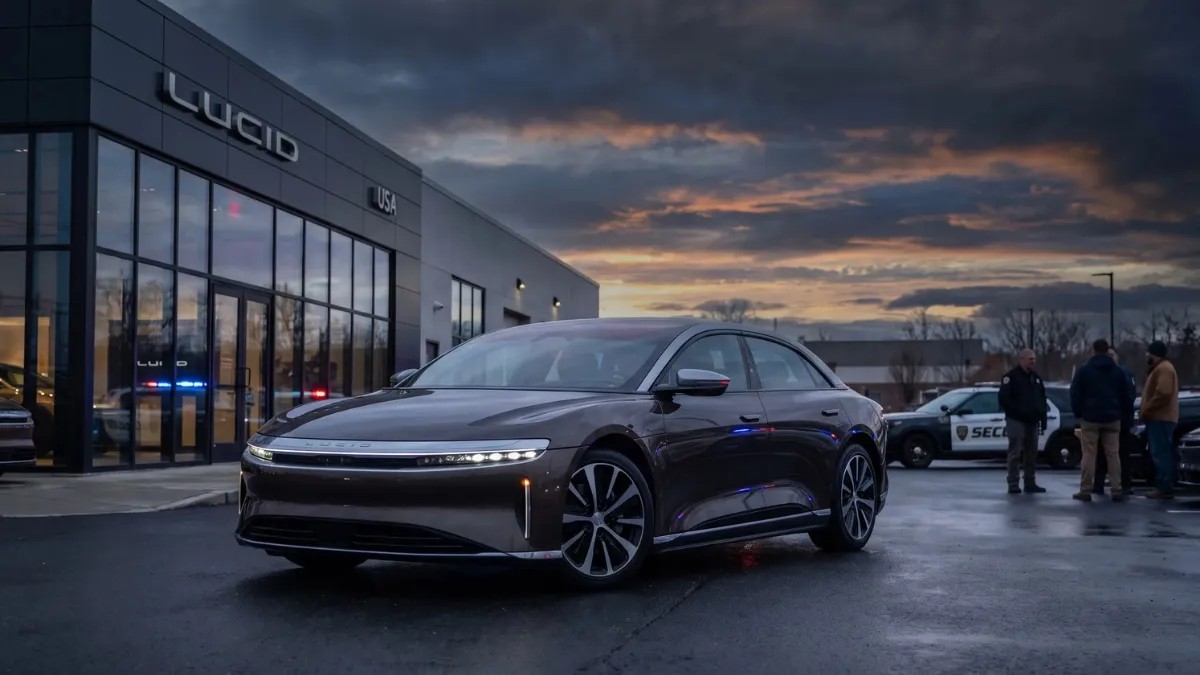
What’s happening with the Lucid Air recall
The issue centers on an electrical circuit connected to the vehicle’s exterior lighting system. Under certain conditions, the circuit may overheat, creating a risk that could lead to a vehicle fire.
That wording matters. A recall doesn’t mean every affected Lucid will catch fire, or that every Air sedan on the road is unsafe to drive. It means the manufacturer and regulators have identified a potential safety problem that requires attention.
For Lucid, the recall is particularly significant because the Air is the company’s flagship luxury sedan. Lucid has built its brand around advanced electric technology, impressive driving range and high-end engineering.
Now, owners have a much less glamorous question to answer: Is my car affected?
The answer depends on the vehicle’s identification number, or VIN. NHTSA says owners can enter their VIN into its recall database to determine whether their specific vehicle has an unrepaired safety recall.
Why this matters beyond Lucid
Modern cars are becoming astonishingly sophisticated.
A vehicle that looks like a traditional sedan from the outside can contain a maze of computers, sensors, wiring, software and electronic control systems underneath. What looks like a simple light on the outside can depend on an intricate electrical network behind it.
Think of it like the wiring in your house. A single overloaded connection might look insignificant, but heat can turn a tiny electrical problem into something much more serious.
That’s the challenge automakers face as vehicles become more computerized.
Electric cars don’t eliminate traditional automotive safety risks. Instead, they introduce new engineering challenges involving batteries, charging equipment, software, sensors and electrical systems.
And the timing of this Lucid recall is notable.
The auto industry is already facing increased scrutiny over electronic safety systems. China, for example, recently launched a major vehicle-quality campaign following a recall involving about 4.3 million vehicles from nine automakers, including Tesla. That recall involves concerns about emergency door-release systems during power failures or fires.
The message is becoming harder to ignore: the smarter cars get, the more important their electronic safety systems become.
What the recall means for Lucid owners
For an affected owner, the biggest concern isn’t necessarily the value of the vehicle. It’s the uncertainty.
You bought a luxury EV expecting advanced technology to make driving easier and safer. Now you’re being asked to check whether an electrical component in that technology could create a fire hazard.
That’s enough to make any driver uneasy.
The good news is that federal recall procedures are designed to give owners a way to address exactly these problems. NHTSA says manufacturers generally must provide an appropriate remedy for safety recalls, and recall repairs are offered free through authorized repair facilities.
Owners shouldn’t rely on social media posts or assume their car is affected simply because another Air sedan is.
Instead, check the VIN.
NHTSA’s recall system can show whether a particular vehicle has an unrepaired recall. The agency also warns that some newly announced recalls may not immediately appear for every VIN, because manufacturers continuously add affected vehicle identification numbers to the database.
That means checking once isn’t necessarily the end of the story.
If you’re a Lucid owner, it’s smart to keep an eye on official communications from the automaker and NHTSA as more information becomes available.
The money and trust problem
Recalls can also create a less obvious cost: uncertainty about a car’s reputation.
A luxury vehicle isn’t just transportation. For many buyers, it’s a major financial decision.
People spending tens of thousands of dollars on a vehicle expect reliability, service and peace of mind. A safety recall can raise questions about all three.
For a relatively young automaker such as Lucid, that matters.
Established manufacturers have spent decades building dealer networks, service operations and customer relationships. Lucid is still building its place in an intensely competitive U.S. automotive market.
One recall doesn’t define a company.
Every major automaker deals with recalls, including companies that have been making cars for generations. The real test is how quickly the manufacturer identifies the problem, communicates with customers and fixes affected vehicles.
That’s where consumer confidence can either strengthen or weaken.
Critics see a bigger EV problem
Skeptics of rapidly advancing automotive technology may see the Lucid recall as another warning sign.
Their argument is straightforward: the more electronics and software a vehicle contains, the more potential failure points engineers have to manage.
But the other side is just as important.
Recalls are part of the safety system itself. Finding a defect and issuing a recall can show that manufacturers and regulators are identifying problems before they affect even more people.
NHTSA says its recall system exists to identify unreasonable safety risks and ensure manufacturers provide remedies. The agency also monitors recall management and whether owners receive effective repairs.
So the existence of a recall isn’t proof that EVs are inherently unsafe.
It’s proof that vehicle safety requires constant monitoring.
And here’s the part that’s genuinely remarkable: today’s cars can contain enough computing and electronic hardware to make a small circuit problem a national safety story involving more than 27,000 vehicles.
What happens next
The immediate focus will be on affected Lucid owners and the recall remedy.
Drivers should watch for official notices, updated VIN information and instructions from Lucid. If your vehicle appears in the recall database, follow the manufacturer’s guidance rather than guessing about whether it’s safe to continue driving.
NHTSA also recommends that vehicle owners regularly check for open recalls. Its system allows searches by VIN or license plate, while its SaferCar app can provide recall alerts.
The bigger question is what this means for Lucid’s reputation.
The company is competing in a market where consumers increasingly expect electric vehicles to combine luxury, performance and advanced technology with dependable everyday ownership.
That means every safety issue gets attention.
For shoppers considering a Lucid Air, this recall shouldn’t automatically end the conversation. But it should remind you to check the specific vehicle’s recall history before buying, especially if you’re shopping used.
A luxury car can impress you with its technology, but trust is still the feature drivers value most.

About the Author
NewsDayPlus Editorial Team
The NewsDayPlus Editorial Team creates accurate, easy-to-understand content covering cars, motorcycles, electric vehicles, automotive technology, vehicle launches, prices, reviews, and industry news.
Our team researches information from reliable and official sources and aims to keep articles useful and up to date.
We are committed to accuracy, transparency, and reader-focused automotive journalism.
For corrections or editorial questions, please contact the NewsDayPlus team through our Contact Us page.
NewsDayPlus Editorial Team
NewsDayPlus.com