
Picture this: you’re two hours into an 11-hour flight across the Atlantic, finally settling in, maybe just drifted off to sleep — and then the plane makes a sharp U-turn. alaska airlines emergency That’s exactly what happened to passengers on Alaska Airlines flight AS181 this past weekend, and the story behind it is a good reminder of just how seriously airlines take even the smallest technical red flags.
What Actually Happened
On July 19, 2026, Alaska Airlines flight AS181 — a Boeing 787-9 Dreamliner registered N780HA — took off from Rome’s Fiumicino Airport at around 3:45 p.m. local time, bound for Seattle-Tacoma International Airport. It’s a long haul, roughly 5,700 miles, scheduled to take about 11 hours and 20 minutes nonstop.
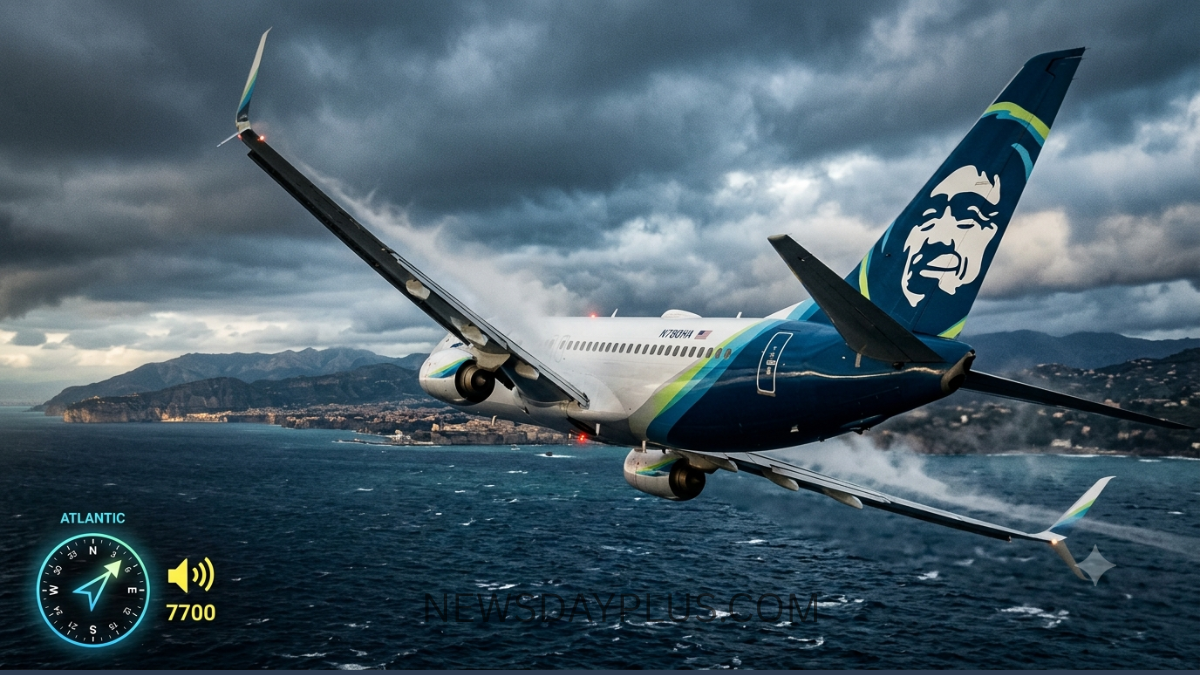
Everything looked routine at first. The aircraft climbed normally to its cruising altitude of 34,000 feet as it crossed over France. But roughly two hours into the flight, while the plane was tracking over southeastern England, the crew made the call to reverse course. The aircraft began descending to 25,000 feet and turned back the way it came.
Shortly after, the flight crew set the aircraft’s transponder to squawk 7700 — aviation’s universal code for a general emergency. It’s the kind of signal that instantly lights up on every radar screen in the region and tells air traffic control: this flight needs priority, now.
Why the U-Turn?
The reported cause was engine vibration. Rather than pushing on across the Atlantic with a potential issue, the crew opted to turn back toward Europe. On the way, the aircraft carried out maneuvers consistent with a fuel dump — something long-haul jets often do before an unscheduled landing, since they need to shed weight to get below the maximum structural landing limit.
It’s worth pausing on why that matters. Widebody aircraft like the 787-9 are loaded with fuel for long crossings, and landing at that heavier weight isn’t something pilots do unless they have to. Dumping fuel over open water or unpopulated areas is a standard, well-practiced precaution — not a sign of panic, but a sign of a crew following procedure carefully.
The jet ultimately landed safely back at Rome Fiumicino on runway 16R, roughly five hours and thirty minutes after it first took off. No injuries were reported among passengers or crew.
The Bigger Picture: A Small Fleet Under Pressure
Here’s the detail that’s turned this from a routine diversion into a bigger talking point: Alaska Airlines currently operates only five Boeing 787-9 Dreamliners. That’s a notably small fleet for long-haul, widebody service, which means there’s very little operational cushion if one aircraft goes down for inspection or repairs.
This particular route — nonstop service between Seattle and Rome — is also relatively new. Alaska launched it in April 2026 as part of its broader post-merger expansion following its combination with Hawaiian Airlines, and it represents one of the airline’s first real pushes into transatlantic widebody flying. An emergency diversion just a few months into that expansion isn’t a great look, even though the outcome was completely safe.
What About the Passengers?
Stranded passengers spent hours waiting in Rome before Alaska Airlines arranged a new departure later that evening. For travelers in situations like this — flights departing from the EU that get significantly delayed or diverted — EU261 regulations can sometimes apply, potentially entitling affected passengers to compensation of up to €600 depending on the circumstances and distance involved. Anyone on that flight who wants to pursue compensation should check directly with Alaska Airlines or consult EU261 guidance for the specifics of their case.
The Takeaway
At the end of the day, this is a story with a genuinely good ending: the plane landed safely, nobody was hurt, and the crew followed exactly the kind of careful, by-the-book procedure that emergency protocols are designed for. But it also puts a spotlight on Alaska Airlines’ still-young widebody operation — a five-aircraft fleet flying ambitious new international routes, with not a lot of room for error when something goes wrong mid-flight.
Alaska Airlines has not yet detailed the specific cause of the engine vibration or how long the aircraft will be out of service for inspection. As more information comes out, it’ll be worth watching whether this was an isolated mechanical hiccup — or a sign of growing pains as the airline scales up its international ambitions.
Disclaimer: This post is based on publicly available flight tracking and news reports as of publication and is intended for general informational purposes. Details of ongoing investigations may change as more official information is released by Alaska Airlines or aviation authorities.

About the Author
Aparna is the founder and editor of NewsDayPlus, where he covers breaking U.S. news, Social Security updates, finance, stock market trends, technology, consumer affairs, and major national events. He researches information from official government agencies, company announcements, and reputable news sources to produce accurate, fact-checked, and reader-friendly articles. His mission is to make complex topics simple, reliable, and useful for everyday readers across the United States.