
From rooftops to farmland, solar energy is transforming how Americans power their lives this week.
Here’s the shocker: solar energy now makes up more than half of all new electricity added in the U.S. this year. That’s right — the sun is officially America’s fastest-growing power source, and it’s reshaping everything from utility bills to job markets. What’s happening right now isn’t just a green revolution; it’s an economic one.
Across the country, solar panels are popping up faster than coffee shops. The Department of Energy reports record installations this summer, driven by falling costs and new federal incentives. For the average American, that means cheaper electricity, cleaner air, and — maybe most surprising — more local jobs than coal or oil ever created.
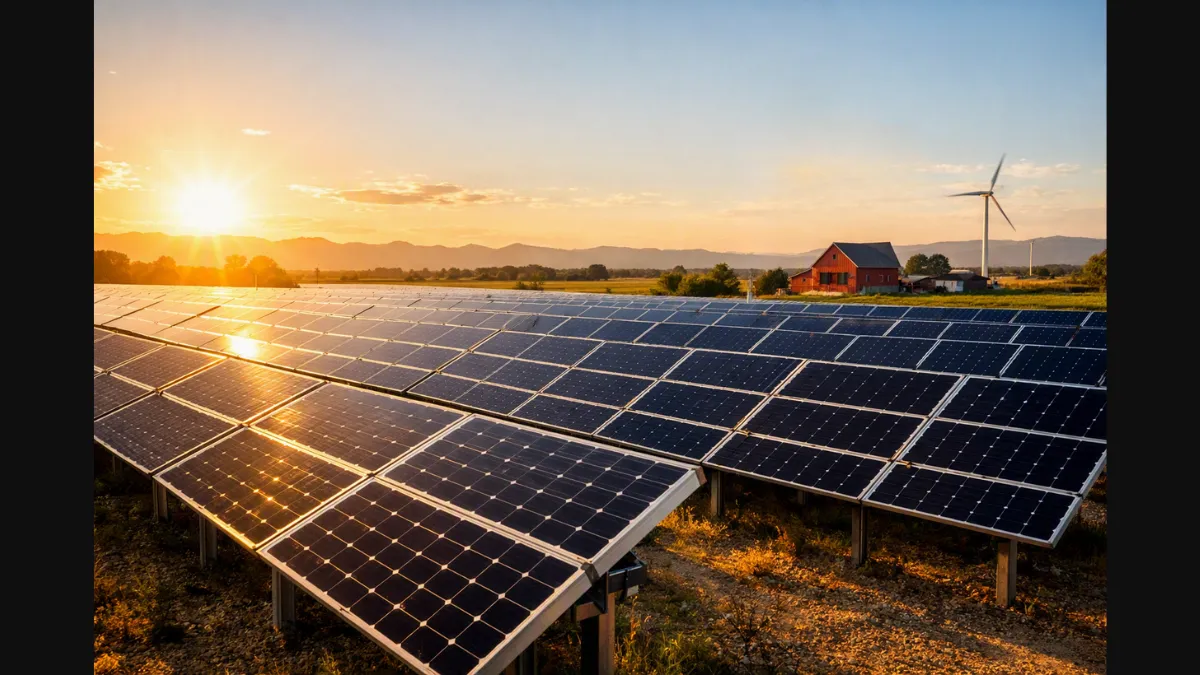
Think of solar like the smartphone of energy: once a luxury, now a necessity. Homeowners are installing rooftop panels to cut costs, farmers are leasing land for solar farms, and entire towns are switching to community solar projects. It’s not just about saving the planet — it’s about saving money.
For families, the impact is tangible. Utility bills are dropping in states like Texas, Florida, and California, where solar adoption is booming. Parents are teaching kids that sunlight isn’t just for summer fun — it’s powering their homes. And for workers, the solar boom means opportunity: electricians, installers, and engineers are finding steady paychecks in a field that’s growing faster than tech.
But not everyone’s cheering. Critics argue that solar’s rise is uneven — rural areas still face grid challenges, and some utilities are pushing back against rooftop installations. Others worry about recycling old panels and the strain on supply chains. Still, experts say the benefits far outweigh the hurdles. “We’re witnessing the biggest energy shift since the invention of the light bulb,” one analyst told me.
So what’s next? Watch for breakthroughs in battery storage and solar efficiency. Companies are racing to make panels that work even on cloudy days, and states are competing to attract solar manufacturing plants. If you’re thinking about switching, this might be the best year yet — tax credits are high, and technology is smarter than ever.
The line that sticks is simple: America isn’t just chasing the sun — it’s learning to live by it.
FAQs
Q1: Why is solar energy growing so fast in the U.S. right now?
Federal incentives, falling costs, and improved technology are driving record installations nationwide.
Q2: How does solar energy affect everyday Americans?
It lowers electricity bills, creates jobs, and reduces pollution in local communities.
Q3: Are solar panels affordable for homeowners?
Yes, prices have dropped nearly 70% over the past decade, and tax credits make installation more accessible.
Q4: What challenges does solar energy face in the U.S.?
Grid integration, recycling old panels, and uneven access in rural areas remain key issues.
Q5: What’s the future of solar power in America?

About the Author
Aparna is the founder and editor of NewsDayPlus, where he covers breaking U.S. news, Social Security updates, finance, stock market trends, technology, consumer affairs, and major national events. He researches information from official government agencies, company announcements, and reputable news sources to produce accurate, fact-checked, and reader-friendly articles. His mission is to make complex topics simple, reliable, and useful for everyday readers across the United States.