
JPMorgan Shipbuilding Investment: Why the Industry Is Getting Fresh Attention
The global shipbuilding industry is attracting new interest as demand grows for modern cargo ships, naval vessels, and cleaner maritime technology. Reports about JPMorgan shipbuilding investment have also sparked curiosity among investors looking for opportunities in transportation and infrastructure.
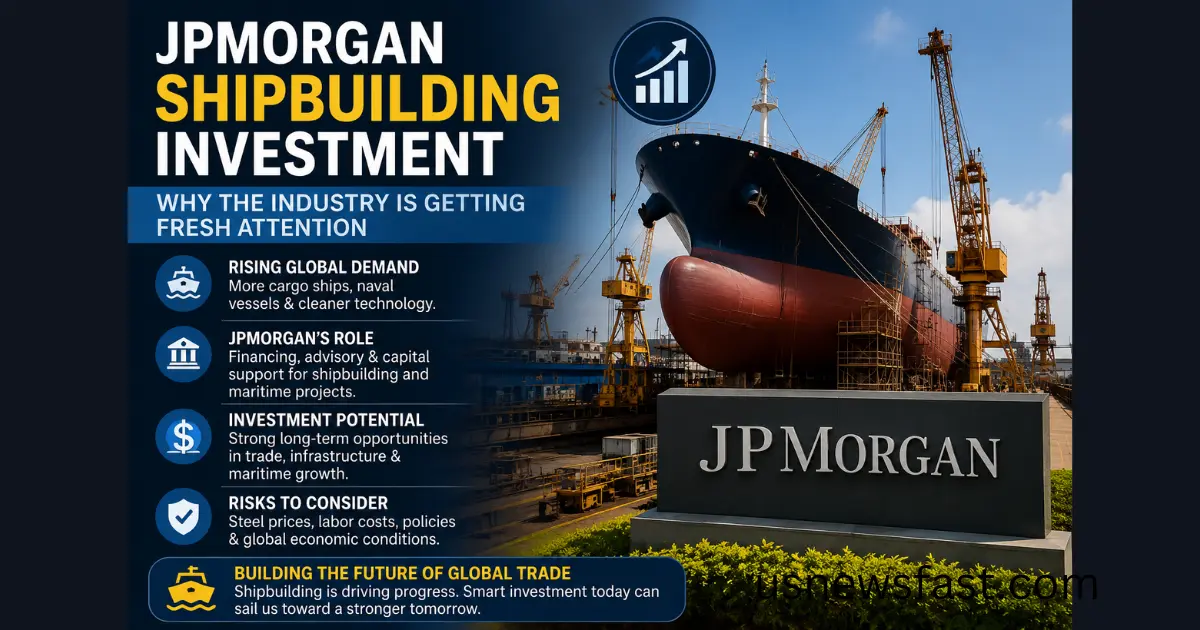
While JPMorgan is widely known for banking and investment services, the firm often supports large industrial projects through financing, advisory services, and capital markets. This does not necessarily mean the company owns or operates shipyards, but it may help fund businesses involved in shipbuilding, shipping, or related infrastructure.
Shipbuilding is expected to play an important role in global trade over the next decade. Many countries are investing in stronger supply chains, energy-efficient vessels, and advanced maritime technology. These trends could create new opportunities for companies that build ships, manufacture marine equipment, or provide logistics services.
For investors, the shipbuilding sector offers both potential rewards and risks. Rising demand for new ships can boost company earnings, but the industry is also affected by steel prices, labor costs, government policies, and global economic conditions. Careful research is essential before making any investment decisions.
As interest in infrastructure and industrial development continues to grow, financial institutions like JPMorgan may remain involved by helping businesses raise capital for major projects. Investors should watch for official company announcements and regulatory filings to better understand any future investments or partnerships.
Overall, the shipbuilding industry remains an important part of the global economy. Whether through financing, advisory work, or broader infrastructure investment, major financial firms continue to play a role in supporting long-term growth across the maritime sector.
Disclaimer: This article is for informational purposes only and should not be considered financial or investment advice.

About the Author
Aparna is the founder and editor of NewsDayPlus, where he covers breaking U.S. news, Social Security updates, finance, stock market trends, technology, consumer affairs, and major national events. He researches information from official government agencies, company announcements, and reputable news sources to produce accurate, fact-checked, and reader-friendly articles. His mission is to make complex topics simple, reliable, and useful for everyday readers across the United States.