
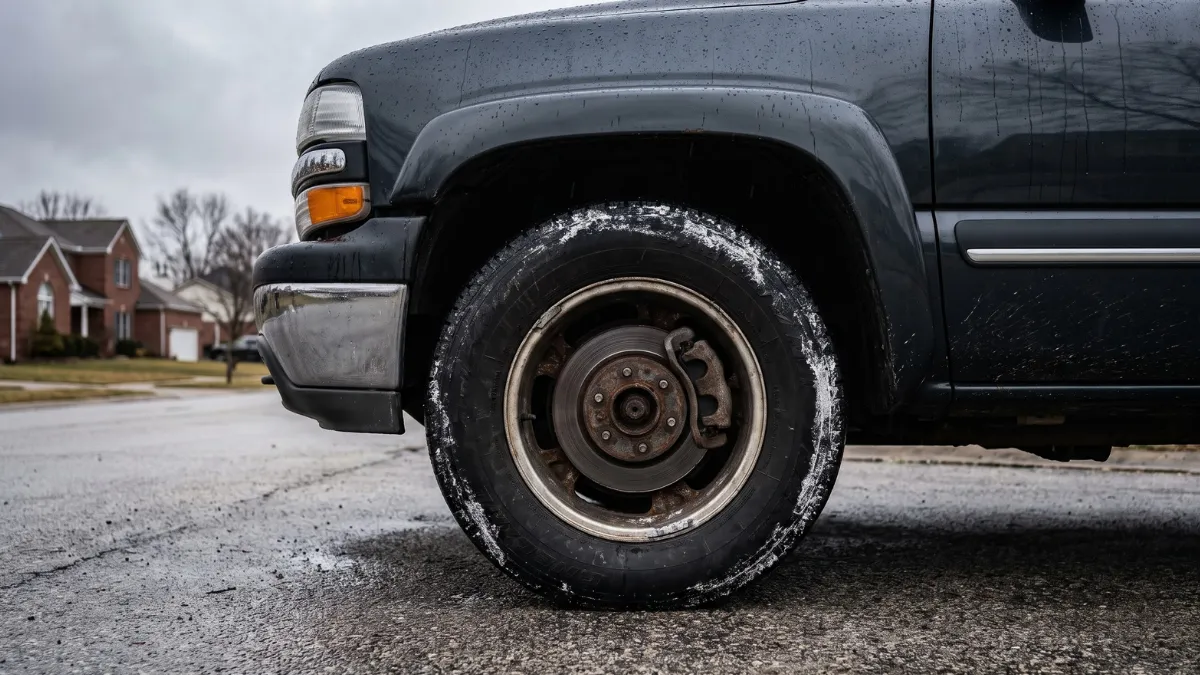
The widely cited 1.2-million-vehicle GM brake investigation dates back to 2004, not a new 2026 probe.
A major GM brake investigation involving roughly 1.2 million vehicles sounds like breaking news, but there’s an important catch: the investigation is more than two decades old.
Federal safety officials opened the probe in 2004 after receiving complaints about antilock braking behavior on certain older General Motors pickups and SUVs. The investigation covered about 1.27 million vehicles from the 1999 through 2002 model years across 21 states and Washington, D.C.
That distinction matters right now because the figure continues to circulate online as though regulators have just expanded a new GM investigation to 1.2 million vehicles.
They haven’t, based on the current public NHTSA records reviewed for this report.
The original problem involved low-speed braking
The old investigation centered on a strange problem involving the vehicles’ antilock brake systems.
NHTSA said corrosion could cause the ABS system to activate at very low speeds. Instead of helping the driver stop normally, the system could increase stopping distance when the vehicle was traveling below roughly 10 mph.
That might sound like a minor problem.
It’s not.
Imagine pressing the brake pedal as you roll toward a stop sign, only to discover that the vehicle doesn’t slow down as quickly as you expect. Even a few extra feet can matter when a pedestrian, another vehicle or a child is nearby.
NHTSA reported nearly two dozen crashes connected to the issue when it opened the investigation, including one crash that resulted in four injuries. At that stage, the agency reported no fatalities associated with the braking problem.
GM later recalled about 800,000 vehicles in 14 northern states because corrosion could interfere with the ABS system. The company said road salt and grime could contribute to the problem.
Why the 1.2 million number keeps appearing
The confusion comes from the difference between an investigation population and a recall population.
NHTSA’s original investigation covered approximately 1.27 million GM pickups and SUVs. The later recall involved a smaller group of about 800,000 vehicles in northern states.
Those numbers describe different stages of the same safety story.
An investigation is not automatically a recall. NHTSA explains that investigators review complaints and other information before determining whether a potential defect warrants additional action.
That’s an important distinction for vehicle owners.
If you see a headline saying “1.2 million GM vehicles under investigation,” you shouldn’t automatically assume 1.2 million cars currently face an active safety defect.
The vehicle’s model year, VIN and the specific investigation all matter.
What this means for GM owners today
For someone driving an older GM truck or SUV, the safest move isn’t to panic.
It’s to check the vehicle’s recall status.
NHTSA provides a VIN-based recall search that can show whether a specific vehicle has an unrepaired safety recall. The agency says owners can enter the 17-character VIN to see whether an open recall is associated with the vehicle.
That matters because recall information can be much more precise than a broad headline.
A vehicle’s age, configuration and location can determine whether it belongs to an affected group.
The original GM brake issue also demonstrates why geography can matter. Road salt and corrosion played a role in the old investigation, making vehicles operated in northern states particularly relevant to the problem.
For families who rely on an older pickup or SUV every day, brakes aren’t something you want to gamble with.
A vehicle may look perfectly normal in the driveway while a hidden mechanical or electronic problem waits underneath.
The safety lesson is bigger than one recall
The old GM investigation offers a useful reminder about how vehicle safety investigations work.
NHTSA doesn’t need thousands of identical crashes before it can start asking questions. The agency says there is no fixed number of complaints required to open an investigation. Officials examine complaints and other information to determine whether a potential safety trend exists.
That’s important because modern vehicles generate enormous amounts of safety information.
Drivers submit complaints. Automakers collect warranty data. Investigators examine crashes. Engineers analyze components.
Sometimes those pieces reveal a pattern that isn’t obvious to an individual driver.
Think of it like a doctor noticing several patients with the same unusual symptom. One case might be random. A pattern across many cases deserves a closer look.
That’s essentially what a federal safety investigation is designed to do.
GM faces newer brake-related safety issues too
The fact that the 1.2-million-vehicle investigation is old doesn’t mean GM has had no recent brake-related safety actions.
In 2026, NHTSA published a GM recall involving certain ACDelco GMW DOT 3 brake and clutch fluid produced in 2022. The agency said testing found the affected brake fluid failed a federal compliance test because of visible sediment.
That is a separate matter from the 2004 GM truck investigation.
The distinction is crucial.
Mixing the two stories can make a historical investigation look like a brand-new defect affecting more than a million current vehicles.
The available NHTSA information does not support that interpretation.
There have also been other GM brake-related recalls involving different components and vehicle groups. For example, a 2024 recall addressed brake-line damage on certain GM cutaway vehicles where brake lines could rub against body mounts.
Again, those cases involve different vehicles and different technical problems.
Why drivers should still pay attention
Even though the 1.2-million-vehicle investigation is historical, the underlying lesson remains relevant.
Brake problems deserve immediate attention.
You don’t need to understand ABS sensors, hydraulic systems or brake-fluid chemistry to recognize a warning sign. A suddenly different brake pedal, unusual stopping behavior, warning light or change in braking performance deserves a professional inspection.
And recalls aren’t something owners should ignore.
NHTSA says safety recalls do not expire. The agency also says recall repairs are generally provided free through the manufacturer’s authorized dealership.
That’s potentially valuable for owners of older vehicles.
A recall repair can address a safety defect without requiring you to pay the normal repair bill yourself.
What drivers should watch now
The most important thing for GM owners is the VIN, not a viral headline.
If you’re driving an older Chevrolet, GMC or Cadillac, check the vehicle through NHTSA’s recall database. The agency’s search can identify recalls and other safety information connected with a specific vehicle.
Drivers should also watch for new notices from GM and NHTSA.
A federal investigation can eventually lead to a recall, additional testing, a manufacturer action or closure without further action. NHTSA publishes investigation information and updates as records become available.
The key point is simple: the frequently cited 1.2 million GM vehicles figure belongs to a 2004 investigation, not a newly announced 2026 expansion.
That doesn’t make vehicle safety less important.
It makes accuracy more important.
When it comes to brakes, the most important headline isn’t how many vehicles are involved—it’s whether yours is one of them.

About the Author
NewsDayPlus Editorial Team
The NewsDayPlus Editorial Team creates accurate, easy-to-understand content covering cars, motorcycles, electric vehicles, automotive technology, vehicle launches, prices, reviews, and industry news.
Our team researches information from reliable and official sources and aims to keep articles useful and up to date.
We are committed to accuracy, transparency, and reader-focused automotive journalism.
For corrections or editorial questions, please contact the NewsDayPlus team through our Contact Us page.
NewsDayPlus Editorial Team
NewsDayPlus.com