
The billionaire son of Oracle’s Larry Ellison is reshaping the future of Paramount and American entertainment — and most people have no idea who he is.
David Ellison just became one of the most powerful people in Hollywood, and there’s a solid chance you’ve never heard his name until right now.
This week, Ellison’s production company Skydance Media is finalizing its historic merger with Paramount Global — a deal that puts one of America’s most iconic entertainment brands in the hands of a 41-year-old tech billionaire’s kid who once dreamed of being a fighter pilot. The media world is watching with its jaw on the floor.
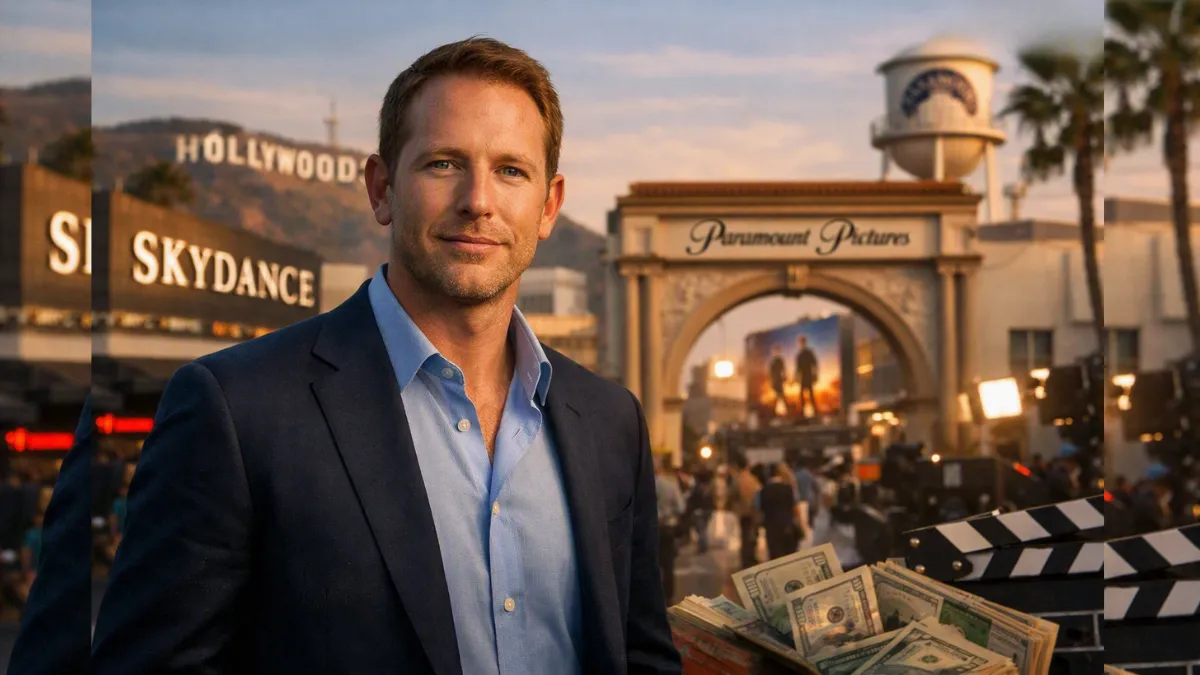
From Fighter Jets to Hollywood Power Broker
Ellison grew up rich — genuinely, staggeringly rich. His father Larry Ellison co-founded Oracle and sits comfortably among the wealthiest people alive. But David didn’t coast on that. He trained as a military pilot, earned his wings, and flew his own jets before pivoting to Hollywood in his late twenties. That backstory matters because it tells you everything about how he operates — fast, precise, and willing to bet on himself.
He founded Skydance in 2010 with a simple but audacious idea: fund big-budget blockbusters that studios couldn’t afford to greenlight alone. You know those Mission: Impossible films that keep getting better somehow? Skydance money is behind them. The Top Gun: Maverick sequel that made a billion dollars and genuinely shocked Hollywood? That’s Ellison’s fingerprints all over it.
Why the Paramount Deal Changes Everything
The Skydance-Paramount merger isn’t just a business transaction. Think of it like someone buying not just your favorite TV channel, but the entire cable system, the content library, and the studio lot where everything gets made. That’s the scale of what Ellison is acquiring.
Paramount owns CBS, MTV, Nickelodeon, Comedy Central, and a film library that stretches back nearly a century. When Ellison takes the wheel, he controls what your kids watch on Saturday morning, what your parents catch on the evening news, and what blockbusters hit theaters next summer. That’s not power in the abstract — that’s power inside your living room.
And here’s the moment that should genuinely stop you: Ellison is doing this while most of his Silicon Valley peers are obsessing over AI and semiconductors. He’s going the other direction — betting that premium storytelling and iconic brands still win in a streaming-saturated world. That contrarian bet is either genius or reckless, and right now nobody knows which.
What This Means for Real Americans
If you work in entertainment, media, or adjacent industries, you’re already watching this closely. The merger triggers a restructuring that industry analysts expect will affect thousands of jobs across Paramount’s sprawling operations. Ellison has signaled he wants to streamline, modernize, and compete aggressively with Netflix and Disney — which sounds clean on paper but translates to real disruption for real people.
For the average viewer, the immediate stakes are about your streaming subscriptions and the content pipeline feeding them. Paramount+ has struggled to compete with the streaming giants. Ellison brings fresh capital and a Silicon Valley efficiency mindset — which could mean better content, smarter technology, and a more competitive platform. Or it could mean a leaner, colder version of a studio that built its identity on human storytelling.
The Critics Aren’t Staying Quiet
Not everyone is cheering. Media veterans and some Paramount shareholders are raising pointed questions about whether a 41-year-old — however talented — has the institutional knowledge to run a company with CBS News at its center. Journalism independence, editorial integrity, and the public trust that comes with owning a major news network aren’t things you can learn from a pitch deck.
Supporters push back hard. They argue Ellison’s track record proves he respects creative talent and doesn’t micromanage — citing his long, successful relationships with directors like J.J. Abrams and Joseph Kosinski. His defenders say Hollywood needs this injection of ambition and capital precisely because the old guard let Paramount drift for a decade.
Both sides make fair points. And that tension — between creative legacy and disruptive capital — is exactly what makes this story worth following.
What You Should Watch for Next
The immediate flashpoint is regulatory. The merger still needs final approvals, and Washington’s appetite for scrutinizing large media consolidations is running hotter than it has in years. Watch for FCC and DOJ signals in the coming weeks — they’ll tell you whether Ellison gets a smooth runway or a bruising fight.
Beyond that, keep your eyes on CBS News. It’s the crown jewel with the most cultural and political sensitivity. How Ellison handles — or doesn’t handle — editorial decisions there will define public perception of his entire tenure faster than any box office number.
And watch the talent. When directors, writers, and showrunners start publicly backing or quietly fleeing Paramount, that movement tells the real story of whether David Ellison is building something great or dismantling something irreplaceable.
Closing
In an era when everyone says Hollywood is dying, David Ellison is writing a $28 billion check that says he disagrees — and the whole world is about to find out if he’s right.
Frequently Asked Questions
Who is David Ellison? David Ellison is the founder and CEO of Skydance Media, a major Hollywood production company. He’s the son of Oracle billionaire Larry Ellison and has produced blockbusters including Top Gun: Maverick and multiple Mission: Impossible films.
What is the Skydance-Paramount merger? It’s a landmark deal in which Ellison’s Skydance Media merges with Paramount Global, giving Ellison effective control over one of America’s largest entertainment companies — including CBS, Paramount Pictures, MTV, and Paramount+.
How does the Paramount merger affect everyday viewers? It affects the content you stream on Paramount+, the shows on CBS, and the films hitting theaters. Ellison’s leadership could mean more investment in content and technology, but also restructuring that changes what gets made and who makes it.
Will the merger cost jobs? Industry analysts widely expect some level of workforce restructuring as Ellison moves to modernize and streamline Paramount’s operations. The full scope of any job changes becomes clearer as the deal closes and integration planning begins.
When does the merger officially close? The deal is in its final stages as of mid-2026, pending regulatory approvals from the FCC and Department of Justice. Most analysts expect a decision within weeks, though Washington’s current posture toward media consolidation adds uncertainty to the timeline.

About the Author
Aparna is the founder and editor of NewsDayPlus, where he covers breaking U.S. news, Social Security updates, finance, stock market trends, technology, consumer affairs, and major national events. He researches information from official government agencies, company announcements, and reputable news sources to produce accurate, fact-checked, and reader-friendly articles. His mission is to make complex topics simple, reliable, and useful for everyday readers across the United States.