
AI infrastructure spending is exploding — and whether you own stocks, hold a job, or pay an electric bill, you’re already caught in the wave.
America’s biggest companies are spending money at a pace that makes the Space Race look like a garage sale. Right now — not in some distant future — Microsoft, Google, Amazon, and Meta are collectively pouring more than $300 billion into AI infrastructure in a single year. That number isn’t a typo, and the shockwaves are already hitting your wallet.
The Trillion-Dollar Bet That Is Quietly Reshaping the American Economy Right Now
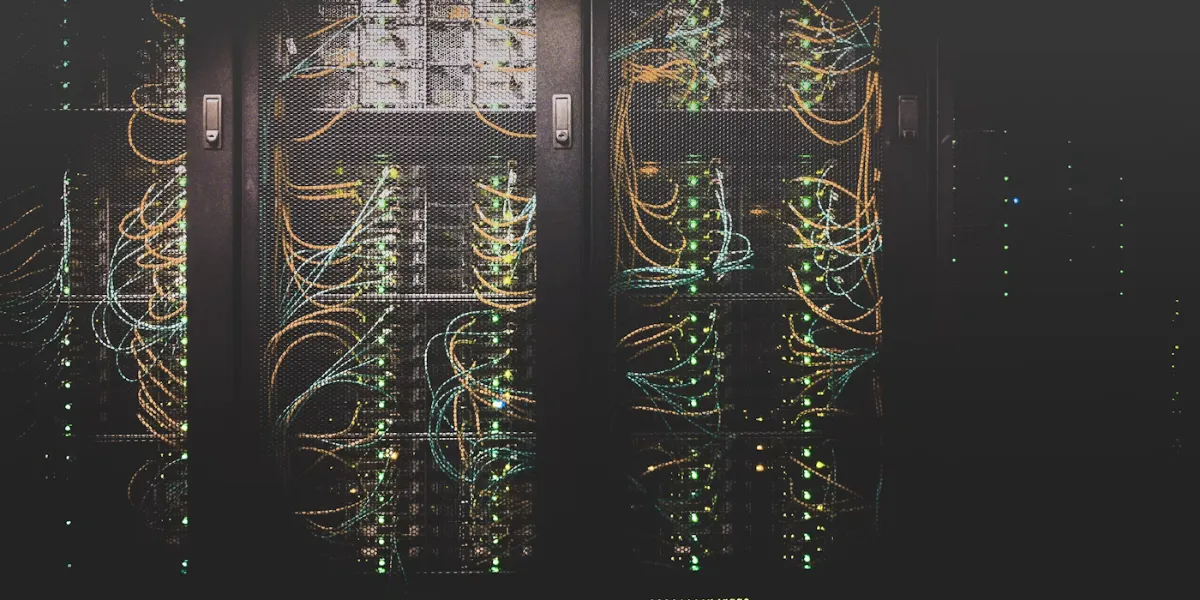
Here’s what’s actually happening: the biggest technology companies on the planet are in a full-sprint race to build the physical backbone of artificial intelligence. We’re talking about data centers the size of small cities, thousands of miles of high-voltage power lines, and chips so specialized they make your laptop processor look like a pocket calculator. This is AI infrastructure spending — and it’s become the single most powerful engine driving U.S. stock markets right now.
Think of it like this: before anyone could stream a movie on Netflix, someone had to lay undersea fiber cables and build server farms. AI needs the same thing, except the scale is ten times bigger and the timeline is five times faster. Every major tech CEO is essentially saying the same thing in their earnings calls this week: “We’re not spending enough. We need to spend more.” That relentless demand is pumping up valuations across the entire market.
$1T+Projected cumulative AI infrastructure investment by U.S. tech companies through 2027, according to multiple Wall Street estimates — more than the entire GDP of the Netherlands.
You might be wondering what any of this has to do with you. If you have a 401(k), a pension, or even a basic index fund — you’re already riding this wave whether you know it or not. Semiconductor companies like Nvidia have become among the most valuable on Earth almost entirely because of AI infrastructure demand. When those stocks surge, retirement accounts across America swell. When they stumble, millions of families feel it.
But the impact runs deeper than stock prices. AI infrastructure construction is creating a boom in very physical, very American jobs: electricians, civil engineers, HVAC specialists, and data center technicians are being recruited at rates not seen since the highway construction era. Small towns in Texas, Wyoming, and Georgia are watching massive data center campuses rise on former farmland, bringing thousands of well-paying jobs with them. The catch? Those same campuses are straining local power grids and driving up electricity bills for the families who already live there.
“A single modern AI data center can consume as much electricity as 80,000 American homes — and dozens of them are coming online right now.”
Expert Tension
Not everyone is popping champagne. Critics — including some serious voices on Wall Street — are calling this a potential bubble. The argument goes like this: companies are spending historic sums building capacity for AI applications that don’t yet exist at the scale needed to justify the investment. “This is faith-based spending,” one veteran tech analyst put it bluntly at a recent investor conference. “These companies are betting that demand will catch up to supply. Historically, that bet doesn’t always pay off.” The ghost of the late-1990s fiber-optic glut — when companies laid cable that took a decade to fill — haunts every serious conversation about AI spending.
On the other side, optimists argue this time genuinely is different. The demand for AI computing power is doubling roughly every few months, driven by real enterprise adoption — hospitals using AI to read X-rays, banks using it to detect fraud, retailers using it to personalize every shopping experience. The CEOs of Microsoft, Google, and Amazon have all made the same case publicly this week: the risk isn’t spending too much, it’s spending too little and falling behind. So far, the market seems to believe them. The S&P 500’s technology sector has been one of the standout performers of the year, powered heavily by AI infrastructure enthusiasm.
What Comes Next
Here’s what you should keep your eyes on. Watch the quarterly earnings calls from Nvidia — they’re essentially the oil company of the AI age, and their order books are the clearest real-time signal of whether AI spending is accelerating or cooling. Watch utility companies too; Constellation Energy, Vistra, and other power providers are becoming unexpected stars in this story because AI data centers are their fastest-growing customers. And watch for any signs of “build-out fatigue” — the moment when a major tech CEO says they’re pulling back on data center commitments. That single earnings call, whenever it comes, is likely to send shockwaves across the market in minutes.
The wild card nobody’s talking about loudly enough is energy. America’s power grid simply wasn’t designed for this. Some analysts estimate that AI data center demand could require the equivalent of adding several new states’ worth of electricity consumption to the national grid within the next five years. That means infrastructure investment isn’t just about chips and cables — it means nuclear plants, solar farms, and batteries on a scale that would make the New Deal proud. The companies that crack the energy problem may end up being the biggest winners of the AI era, even if they never write a single line of code.
In the end, AI infrastructure spending isn’t just a Wall Street story — it’s an American story about who gets to build the future, who profits from it, and whether the rest of us will be left holding the electric bill.
Frequently Asked Questions
- What exactly is AI infrastructure spending?
AI infrastructure spending refers to the massive investment tech companies are making right now in the physical hardware and facilities needed to power artificial intelligence — including data centers, specialized computer chips (like Nvidia’s GPUs), high-speed networking equipment, and the enormous amounts of electricity required to run it all. Without this physical foundation, large-scale AI simply can’t exist.
- Why is this AI spending driving the stock market higher?
When the biggest companies in the world — Microsoft, Google, Amazon, Meta — all commit to spending hundreds of billions of dollars, that money flows through the entire economy. Chipmakers, construction firms, power companies, and equipment manufacturers all benefit. Investors see this as a long-term growth engine, so they’re buying shares in every company connected to the trend, pushing major indexes higher.
- Could this be a bubble that eventually bursts?
It’s a genuinely serious question that top Wall Street analysts are debating right now. Skeptics point to historical examples — like the dot-com era or the fiber-optic glut of the late 1990s — where infrastructure was built far ahead of real demand. Optimists counter that AI adoption by real businesses is growing fast enough to justify the investment. The honest answer is: nobody knows yet, which is exactly why watching the data carefully matters.
- How does this affect average Americans who aren’t investing in stocks?
Even if you don’t own a single share of stock, AI infrastructure is touching your life. Data centers are driving up electricity demand in communities across the country, putting upward pressure on utility bills. They’re also creating thousands of construction and technical jobs in places that haven’t seen economic booms in decades. And the AI tools being built on this infrastructure are already showing up in your doctor’s office, your bank, and your workplace.
- What’s the single most important thing to watch in this story going forward?
Energy. The U.S. power grid is the biggest potential bottleneck in the entire AI buildout. If America can’t generate and deliver enough clean, reliable electricity at a competitive price, the AI infrastructure boom could hit a hard ceiling — regardless of how much money tech companies want to spend. Watch for news about data center power agreements, nuclear energy deals, and grid expansion projects. Those stories will shape everything else.

About the Author
Aparna is the founder and editor of NewsDayPlus, where he covers breaking U.S. news, Social Security updates, finance, stock market trends, technology, consumer affairs, and major national events. He researches information from official government agencies, company announcements, and reputable news sources to produce accurate, fact-checked, and reader-friendly articles. His mission is to make complex topics simple, reliable, and useful for everyday readers across the United States.