
Frontier is expanding its network again, bringing new nonstop options to Las Vegas, California, Idaho and other major markets.
Frontier Airlines is opening more nonstop routes right as fall travel approaches. The low-cost carrier is adding new connections across the U.S. and returning to Oakland, giving travelers more ways to avoid costly connections and long airport layovers.
The expansion is happening quickly. Several new routes begin this month, while additional service launches in September and later in 2026.
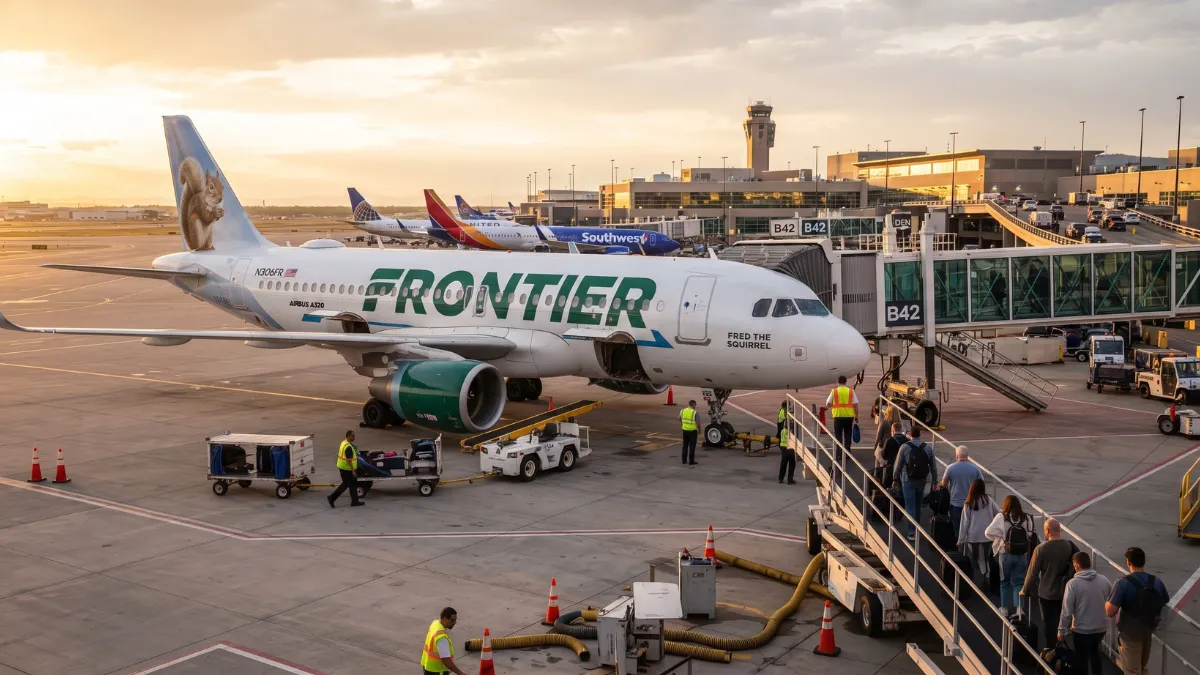
The biggest immediate change is Frontier’s return to Oakland San Francisco Bay Airport. The airline begins nonstop service between Oakland and Las Vegas on August 20, with flights scheduled 11 times a week.
Frontier is also connecting Las Vegas with Boise, Idaho. That service starts September 10 and operates four times a week, giving travelers in both cities another option for reaching the other side of the region without a connection.
The timing matters because nonstop flights can dramatically change the economics of a trip. Instead of spending several hours changing planes, you can board once, fly directly and get closer to your destination without another airport stop.
Frontier has been steadily reshaping its network throughout 2026. Its route announcements include new service from cities such as Nashville, Dallas-Fort Worth, Miami, Orlando and others, along with routes previously operated by Spirit Airlines.
That makes the airline’s latest moves more than a handful of isolated additions. Frontier is trying to put more low-fare choices in front of travelers across major U.S. markets.
For travelers, the most obvious benefit is convenience.
Imagine your flight like a road trip. A nonstop route is the highway that takes you directly toward the destination, while a connection forces you to exit, find another road and hope nothing goes wrong along the way.
That difference can matter enormously when you’re traveling with children, carrying multiple bags or trying to make a short weekend trip work.
Frontier’s new Oakland-Las Vegas service is particularly interesting for travelers who want access between the Bay Area and one of the country’s biggest leisure destinations. Eleven flights per week gives passengers considerably more scheduling flexibility than a route that operates only once or twice weekly.
The airline also announced introductory fares as low as $49 for the new Oakland-Las Vegas and Las Vegas-Boise services. But travelers should remember that an advertised base fare isn’t necessarily the final price, since optional services can add to the total cost.
That’s where Frontier’s model can become confusing for occasional travelers. A cheap headline fare can look fantastic, but the real comparison requires checking the entire trip, including bags, seats and other extras.
Still, when the final price works, nonstop service can create a surprisingly powerful advantage. The cheapest flight isn’t always the one with the lowest fare; sometimes it’s the flight that wastes the least time.
Frontier’s expansion comes with a clear argument on both sides.
Supporters see more routes as good news for consumers. When airlines compete on the same city pair, passengers can gain more choices, and aggressive low-cost pricing can put pressure on competitors.
Frontier is also changing its product as it expands. The airline says it is introducing First Class seating, expanding loyalty benefits and bringing Starlink Wi-Fi to its aircraft as part of what it calls its “New Frontier” strategy.
But skeptics have a reasonable question: Will every new route last?
Airlines frequently adjust schedules when demand doesn’t meet expectations. Frontier itself says flight frequencies and schedules can change, so travelers shouldn’t assume a newly announced route will remain permanent.
That’s especially important for people who plan recurring business trips or family travel around a new nonstop flight. A route can look perfect on paper and still disappear if enough passengers don’t buy tickets.
The next phase of Frontier’s expansion could be just as important as the routes launching now.
In July, the airline announced four additional routes scheduled to launch later in 2026. Frontier’s route announcements show that the carrier is continuing to add destinations across the United States and the Caribbean.
Travelers should watch their local airport closely. A new Frontier route can suddenly turn a previously inconvenient trip into a realistic weekend getaway.
It’s also smart to compare the full price before booking. Look beyond the headline fare and check baggage costs, seat fees, departure times, airport location and the frequency of the flight.
That last point matters more than it sounds. A $49 fare isn’t much help if the flight operates on a schedule that doesn’t fit your trip.
There’s also a broader trend worth watching. Frontier is expanding at a time when the U.S. airline industry continues to compete aggressively for leisure travelers, particularly on routes connecting large metropolitan areas with popular vacation destinations.
The result could be more price competition and more nonstop choices for passengers. And when airlines fight harder for your ticket, you may have more leverage than you realize.
For now, Frontier’s latest moves give travelers in Oakland, Las Vegas and Boise another reason to check flight options before automatically booking the traditional connecting itinerary.
The real winner may not be the airline with the biggest network. It may be the traveler who discovers that a nonstop flight they’ve never had before is suddenly available.
A new nonstop route doesn’t just change the map—it can change how far you can afford to go

About the Author
Aparna is the founder and editor of NewsDayPlus, where he covers breaking U.S. news, Social Security updates, finance, stock market trends, technology, consumer affairs, and major national events. He researches information from official government agencies, company announcements, and reputable news sources to produce accurate, fact-checked, and reader-friendly articles. His mission is to make complex topics simple, reliable, and useful for everyday readers across the United States.